STEP 01
Emergency intake
Collect the property address, loss type, suspected source, affected areas, timing and immediate safety concerns.
Skyfold Restoration Process
A restoration project should have a defined sequence. The exact scope changes with the loss, but the underlying workflow, refined over more than 20 years of Florida jobs, stays focused on safety, source control, documentation, moisture management and appropriate recovery work.

Workflow overview
Six stages, from the first call to the handoff. Not every job uses every stage, but the order of thinking stays the same.
Address, loss type, suspected source, timing and safety concerns.
Inspect conditions and record them before mitigation changes the property.
Control the source where safe and remove standing water.
Air movement, dehumidification and readings tracked over time.
Fire, mold, sewage, storm and contents work matched to the loss.
Records, scope separation and handoff to repairs.
01 · Before work begins
Two buildings can experience the same type of water loss and require completely different restoration scopes. The source, duration, materials, contamination, access and building use all affect the work.

Collect the property address, loss type, suspected source, affected areas, timing and immediate safety concerns.
Inspect visible conditions and identify areas that may contain concealed moisture or secondary damage.
Photographs, notes and measurements create a record of conditions before mitigation changes the property.
Separate what can be dried or cleaned from what requires removal, repair or later reconstruction.
02 · Water and moisture
Standing water can often be removed quickly, but materials may remain wet after the visible water is gone. Flooring assemblies, drywall, insulation, cabinets, subfloors and wall cavities can retain moisture.
A controlled drying plan considers air movement, dehumidification, temperature, material type and the building's normal environmental conditions. Moisture readings are used to track progress rather than relying on a fixed number of hours.
For contaminated water, the scope changes. Sewage and other high-contamination losses require additional controls and may make some materials unsuitable for drying or restoration. Start with water damage restoration for the full service overview.
Source control first. Stop or isolate the active source where it is safe and within the restoration scope. Plumbing, roofing or mechanical repairs may require a separate trade.
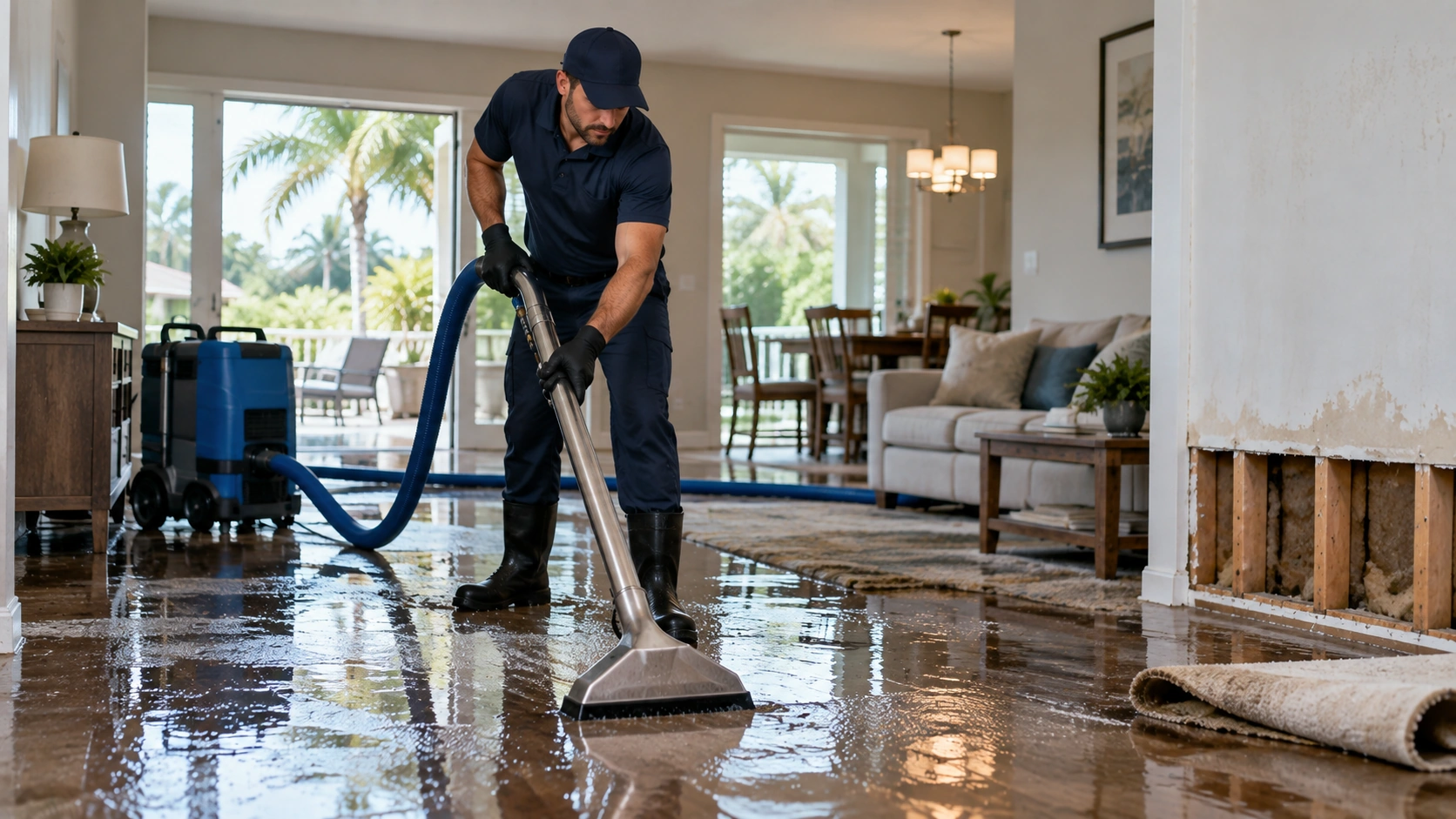
Remove standing water and recover accessible moisture before it migrates further into porous materials.
Learn More →Compare affected areas with unaffected or known-dry areas to understand the extent of the loss.
Learn More →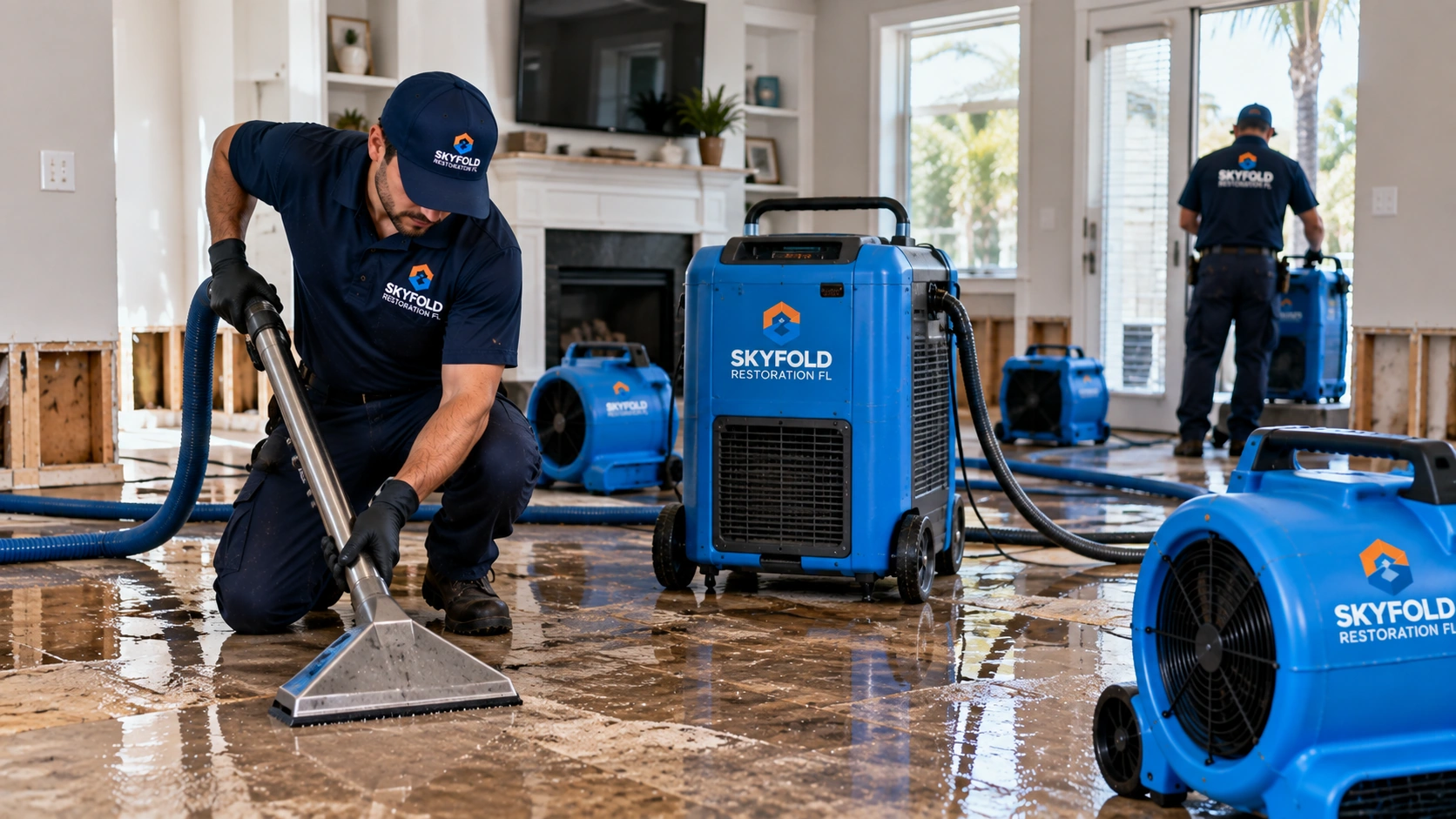
Track readings through the drying period and document the equipment and changing conditions until drying objectives are met.
Learn More →Call to describe the source and affected areas, or start with Emergency Help.
03 · Cleaning and remediation
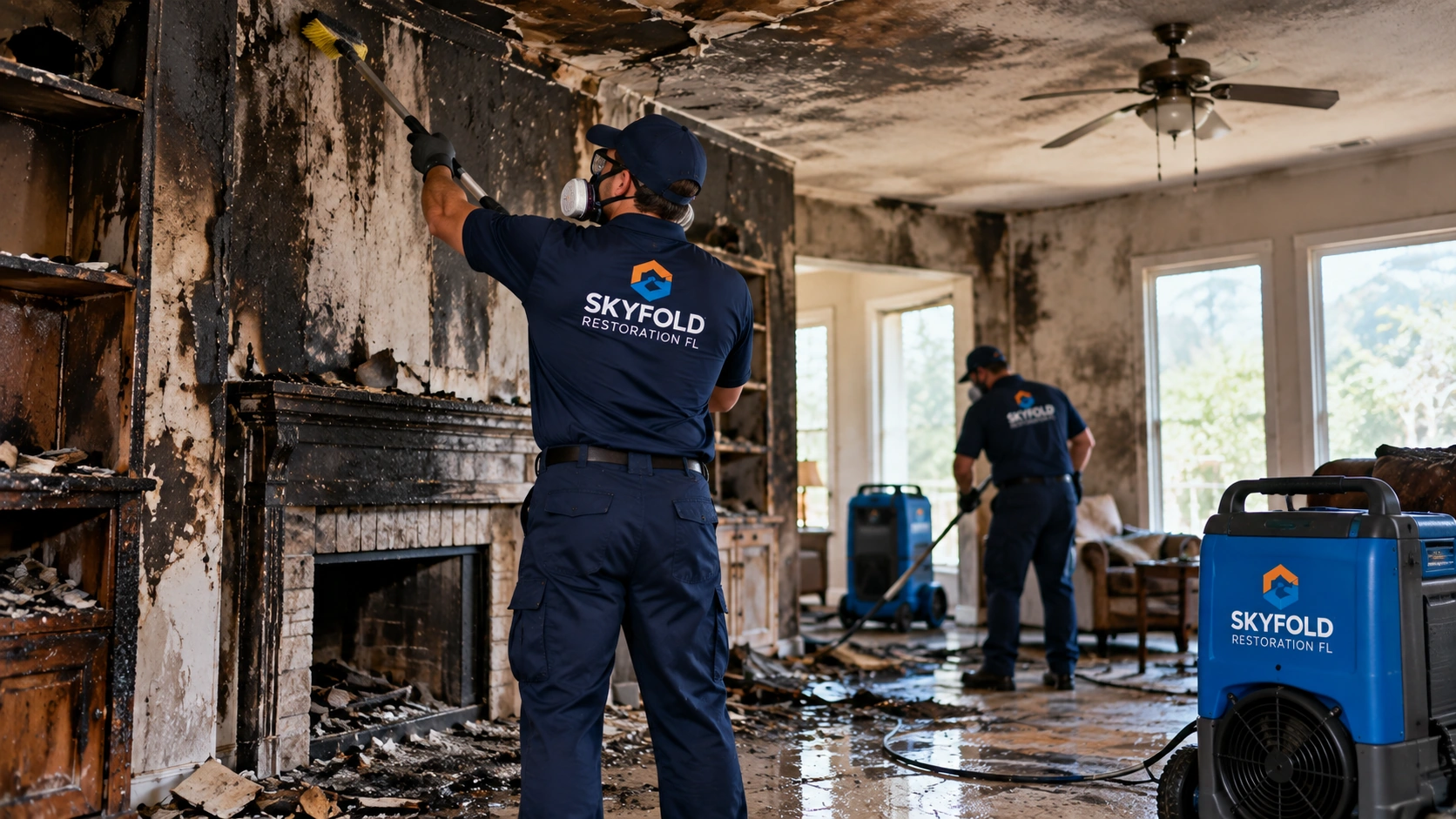
Fire losses can involve soot deposits, smoke odor, water from suppression, damaged finishes and affected contents. Cleaning and repair decisions are based on the condition of each material.
Learn More →
Mold work should address the moisture condition that allowed growth to occur. The response may include containment, removal of affected materials, cleaning and moisture-source correction.
Learn More →
Contaminated environments require controlled handling, appropriate PPE, affected-material decisions and proper cleaning/disposal procedures.
Learn More →
Storm losses can combine roof openings, wind damage, rain intrusion and debris. Stabilization may come before full drying or repair.
Learn More →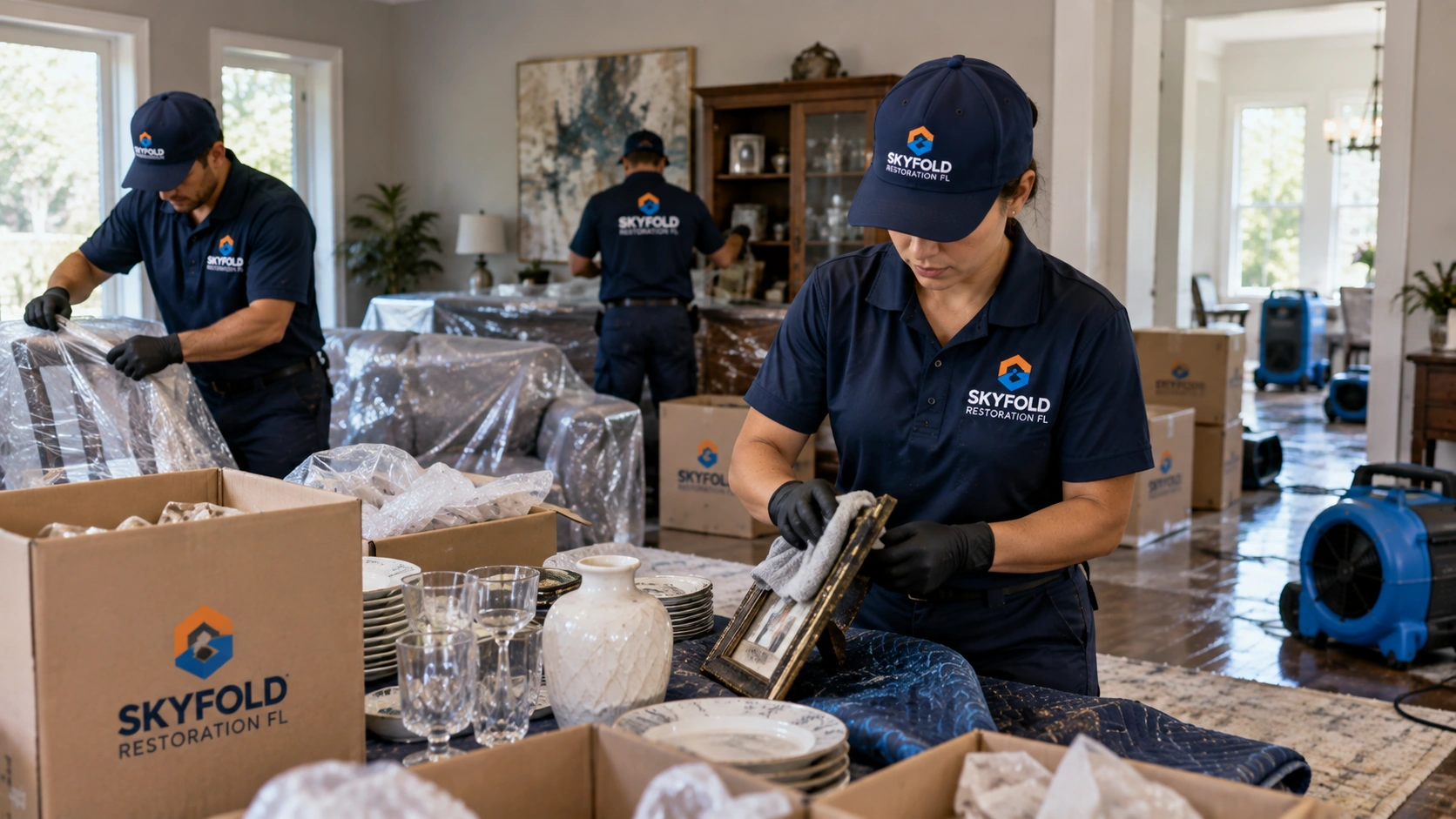
Furniture, clothing, documents, electronics and other belongings may be assessed for cleaning, drying, storage, restoration or replacement.
Learn More →
Businesses may need staged access, containment and drying plans that keep unaffected portions of the property operating when conditions allow.
Learn More →04 · Closeout
A restoration project should leave the property owner with a clear record of what happened and what work was performed.
Document affected areas and relevant conditions before and during the work.
Retain relevant moisture readings and drying information where structural drying was performed.
Keep mitigation, cleaning and reconstruction needs clearly identified so the next phase is understandable.
Pass the documented scope to the repair phase. See repairs & reconstruction.

Equipment & technology
Professional restoration relies on a few core categories of equipment. What goes on a property depends on the type of loss, the materials affected and the conditions found during inspection.
Residential & commercial
Planning issue: One household and a defined affected area.
Restoration consideration: Protect unaffected rooms, manage contents and restore occupied living spaces.
Planning issue: Water can cross units, floors and common areas.
Restoration consideration: Coordinate access, affected units and shared assemblies with the association or manager.
Planning issue: Multiple residents, units and shared systems.
Restoration consideration: Map affected units and common areas, and coordinate access and communication across residents.
Planning issue: Business continuity, sensitive equipment, inventory and opening hours.
Restoration consideration: Separate affected areas and stage work around operations where safe and practical.
Planning issue: Owners, tenants and vendors all need the same information.
Restoration consideration: Keep documentation and scope clear so decisions can be made quickly and shared.
Planning issue: Guest turnover and vacant periods can hide a loss.
Restoration consideration: Document conditions promptly and coordinate access with the owner or manager.
| Property | Common planning issue | Restoration consideration |
|---|---|---|
| Single-family home | One household and a defined affected area | Protect unaffected rooms, manage contents and restore occupied living spaces. |
| Condo / multifamily | Water can cross units, floors and common areas | Coordinate access, affected units, shared assemblies and property management. |
| Office / medical space | Business continuity and sensitive equipment | Separate affected areas, coordinate access and consider operational constraints. |
| Retail / restaurant | Opening hours and inventory | Stage work around operations where safe and practical. |
| Warehouse | Large floor area and stored contents | Protect inventory, map affected zones and plan equipment placement. |
Questions about the process? See the restoration FAQs or browse all services.
Water, fire, smoke, mold, sewage and storm damage each call for a different scope. Call to describe what happened, or start with Emergency Help.