01
Water Damage Restoration
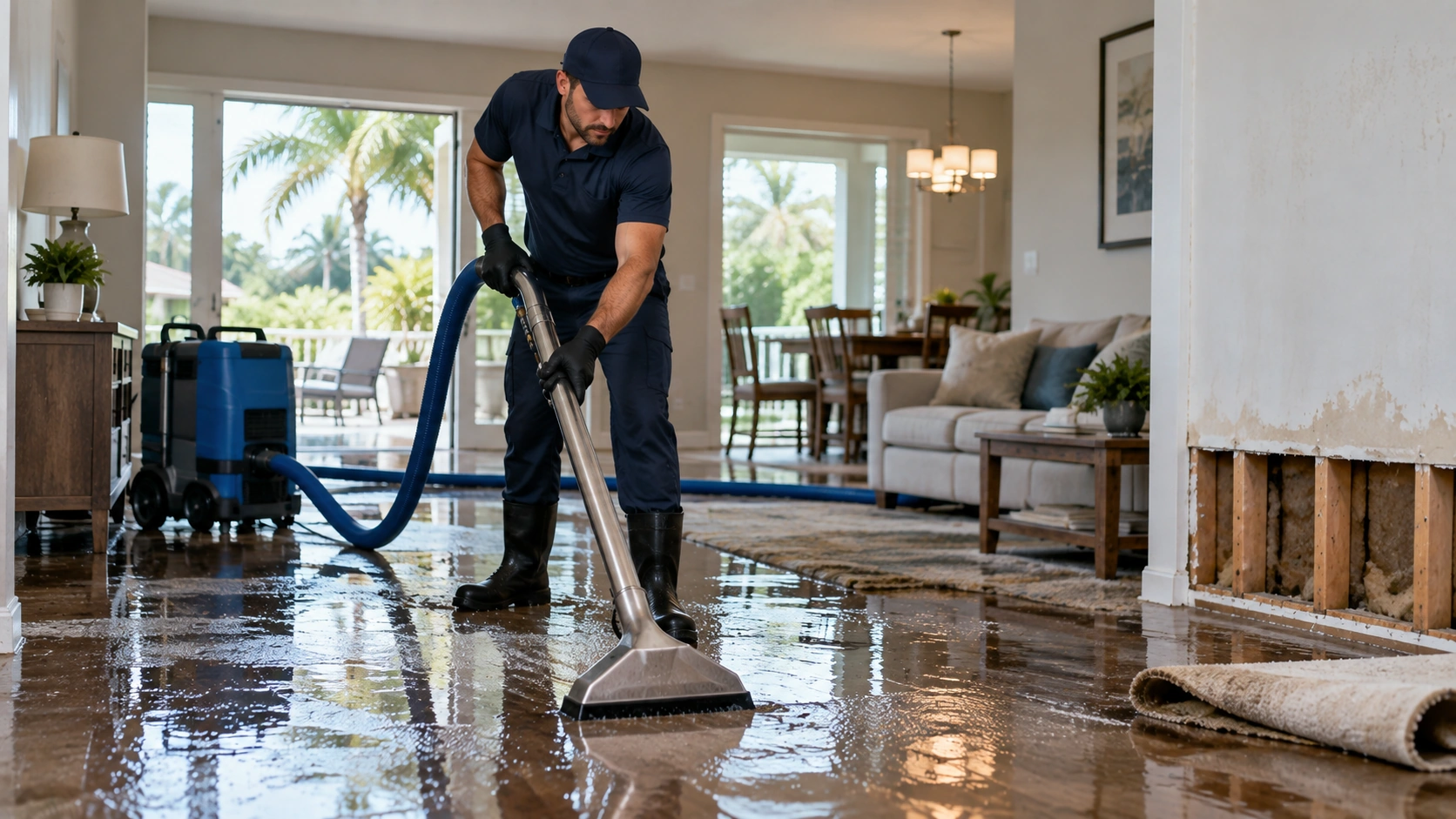
Water damage restoration coordinates assessment, extraction, drying, moisture control, cleaning and necessary repairs after a water loss. It addresses the property as a system rather than treating visible water as the entire problem.
Common needs: Plumbing leaks, appliance leaks, flooding, storm intrusion, building water losses.
Core process: Assessment → extraction → drying → monitoring → restoration
Learn More →02
Emergency Water Damage Restoration
Emergency restoration focuses on stabilizing a property after a sudden leak, overflow, flood, sewage incident or storm intrusion and reducing additional damage as quickly and safely as the situation allows.
Common needs: Burst pipes, overflows, active leaks, flood water, sewage incidents, storm intrusion.
Core process: Source control → stabilization → extraction → drying
Learn More →03
Water Extraction
Water extraction removes standing or retained water from affected areas so materials have less opportunity to absorb additional moisture and the drying process can begin effectively.
Common needs: Standing water, saturated carpet, flooring, localized flooding and retained water.
Core process: Standing water → extraction → moisture reduction
Learn More →04
Water Damage Cleanup
Cleanup can include removal of debris, affected materials, residues and other contamination-related concerns that remain after water removal, with the exact work determined by the loss.
Common needs: Debris, residues, affected materials and cleaning needs after water removal.
Core process: Removal → cleaning → sanitation where appropriate
Learn More →05
Structural Drying
Structural drying targets moisture that remains in building materials such as drywall, flooring, subflooring, insulation and wall cavities after extraction.
Common needs: Wet drywall, flooring, subflooring, insulation, cabinetry and hidden moisture.
Core process: Air movement → evaporation → moisture control → verification
Learn More →06
Water Mitigation
Mitigation is the damage-limiting stage: control the source when possible, remove water, protect contents, stabilize the property and manage moisture before conditions worsen.
Common needs: Active leaks, standing water, saturation, contents exposure and moisture spread.
Core process: Stabilize → extract → protect → dry → document
Learn More →07
Moisture Detection & Monitoring
Moisture detection helps identify affected materials that may not look wet. Monitoring tracks whether moisture conditions are improving during the drying process.
Common needs: Hidden moisture, wet building materials and drying verification.
Core process: Locate moisture → measure → monitor → verify
Learn More →08
Dehumidification
Dehumidification reduces excess humidity so evaporated moisture can be removed from the indoor environment instead of remaining available to re-enter wet materials.
Common needs: High indoor humidity and moisture released from wet materials during drying.
Core process: Evaporation → humidity control → drying support
Learn More →09
Flood Damage Restoration
Flood restoration addresses large-volume water intrusion through assessment, extraction, cleaning, drying and restoration, with added attention to possible contamination.
Common needs: Rising water, drainage failures, heavy rainfall flooding and storm-driven water.
Core process: Assessment → extraction → sanitation → drying → restoration
Learn More →10
Storm & Hurricane Damage
Storm restoration covers water intrusion and building damage after hurricanes, tropical storms and severe weather, starting with emergency stabilization.
Common needs: Roof intrusion, wind-driven rain, damaged openings, storm flooding.
Core process: Stabilize → extract → dry → monitor → repair
Learn More →11
Fire Damage Restoration
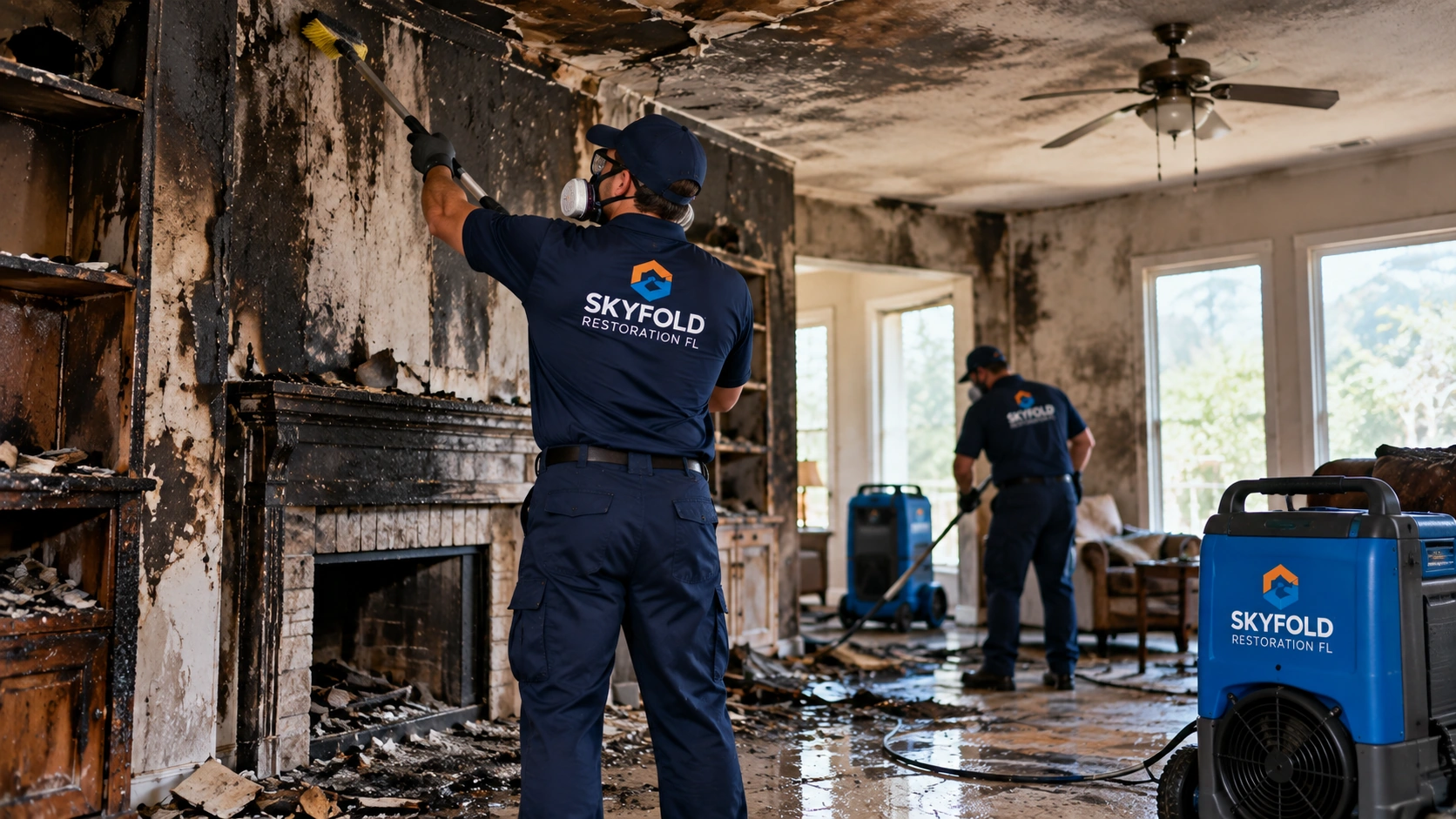
Fire restoration addresses flame, heat, smoke and soot damage along with the water used to put the fire out, as one coordinated scope.
Common needs: Fire damage, soot on surfaces, damaged contents, post-firefighting water.
Core process: Secure → assess → clean → deodorize → rebuild
Learn More →12
Smoke & Odor Cleanup
Smoke cleanup removes residues and treats persistent odor that can remain in porous materials, HVAC pathways and contents after a fire.
Common needs: Smoke residue, lingering odor, soot on walls, ceilings and contents.
Core process: Assess residues → clean → treat odor → verify
Learn More →13
Mold Remediation
Mold remediation identifies the moisture source and affected areas, then uses cleaning, containment, removal and drying suited to the actual conditions.
Common needs: Visible growth, musty odor, materials that stayed wet, persistent humidity.
Core process: Find moisture → contain → remediate → dry → verify
Learn More →14
Biohazard Cleanup
Biohazard cleanup handles sewage and other biologically contaminated areas with protective measures, containment, removal, disinfection and documentation.
Common needs: Sewage backups, contaminated floodwater, unsafe biological contamination.
Core process: Assess → contain → remove → disinfect → document
Learn More →15
Sewage Cleanup
Sewage cleanup addresses black-water and sewer backup losses that need more cautious handling than a clean-water leak.
Common needs: Sewer backups, toilet overflows with solids, contaminated water in living areas.
Core process: Isolate → remove → clean and disinfect → dry
Learn More →16
Emergency Roof Tarping
Temporary roof protection helps limit additional rain intrusion after roof or storm damage while permanent repairs are planned.
Common needs: Missing shingles, storm-damaged roof areas, active roof leaks after severe weather.
Core process: Inspect → protect → document → plan repairs
Learn More →