Roof Leak Water Damage in Florida
Roof leak water damage in Florida is a year-round threat, from summer downpours to hurricane season. A small roof leak can soak attic insulation, stain ceilings, and feed hidden mold long before you see a drip indoors. This guide explains how Florida roofs leak, how to spot the damage, and what to do about it.
Fast Answer
If your Florida roof is leaking, place buckets under active drips, move valuables away, and if safe, cover the exterior breach with a secured tarp as a temporary measure. Do not climb onto a wet or storm-damaged roof. Document stains and damage with photos, then call a roofer for the roof itself and a water damage professional for soaked ceilings, insulation, and walls.
Why Florida Roofs Leak
Florida roofs endure more abuse than almost any other building component in the state.
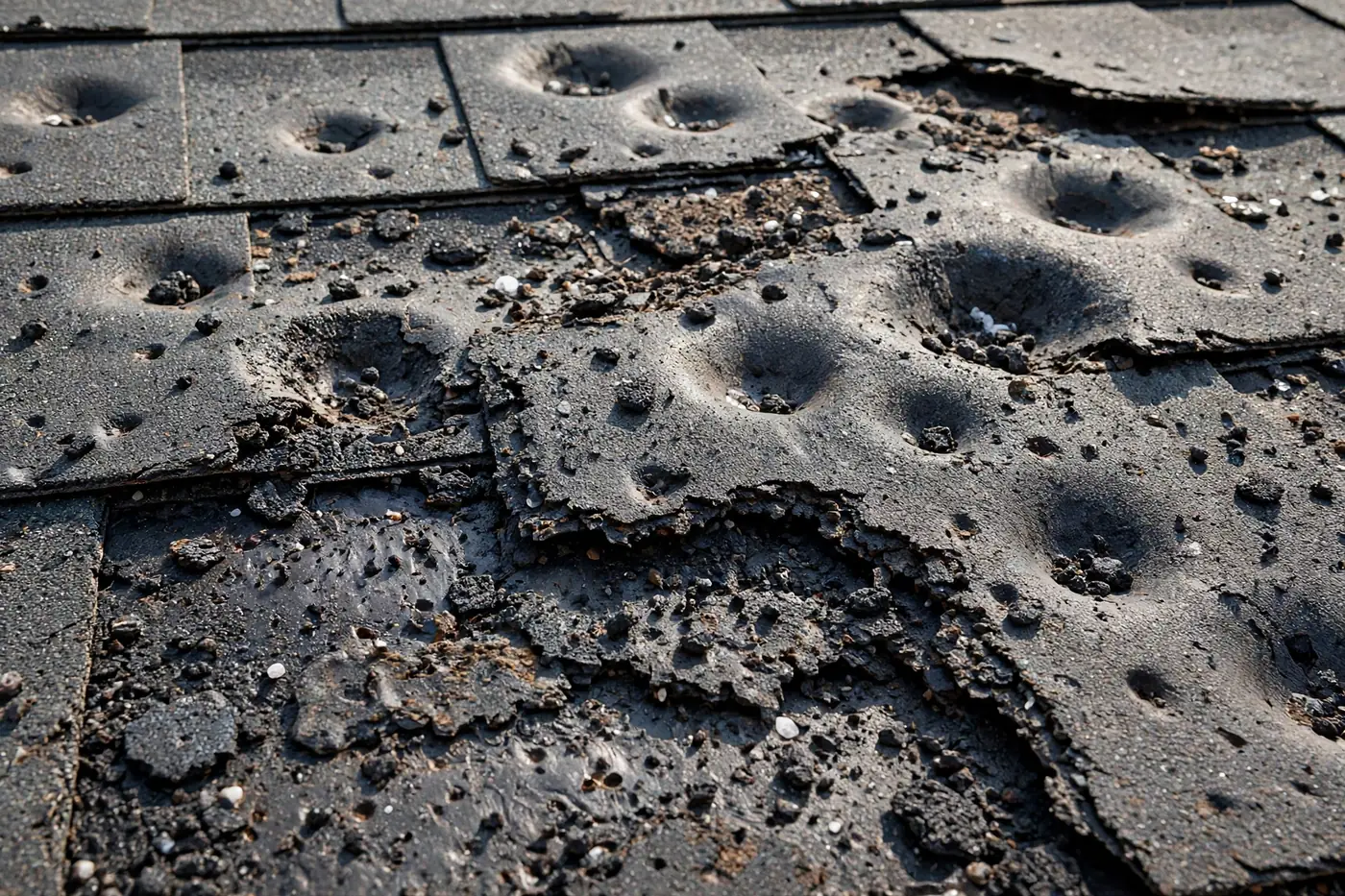
The number one enemy is intense sun and heat. Florida's UV exposure bakes shingles, tiles, and flat-roof membranes year after year, making them brittle, cracking sealants, and curling shingle edges that then catch wind and rain. A roof that looks fine from the ground can have dozens of small vulnerabilities after a decade of Florida sun. Add the daily thermal cycling, hot days and warm nights, and fasteners and flashing work loose over time.
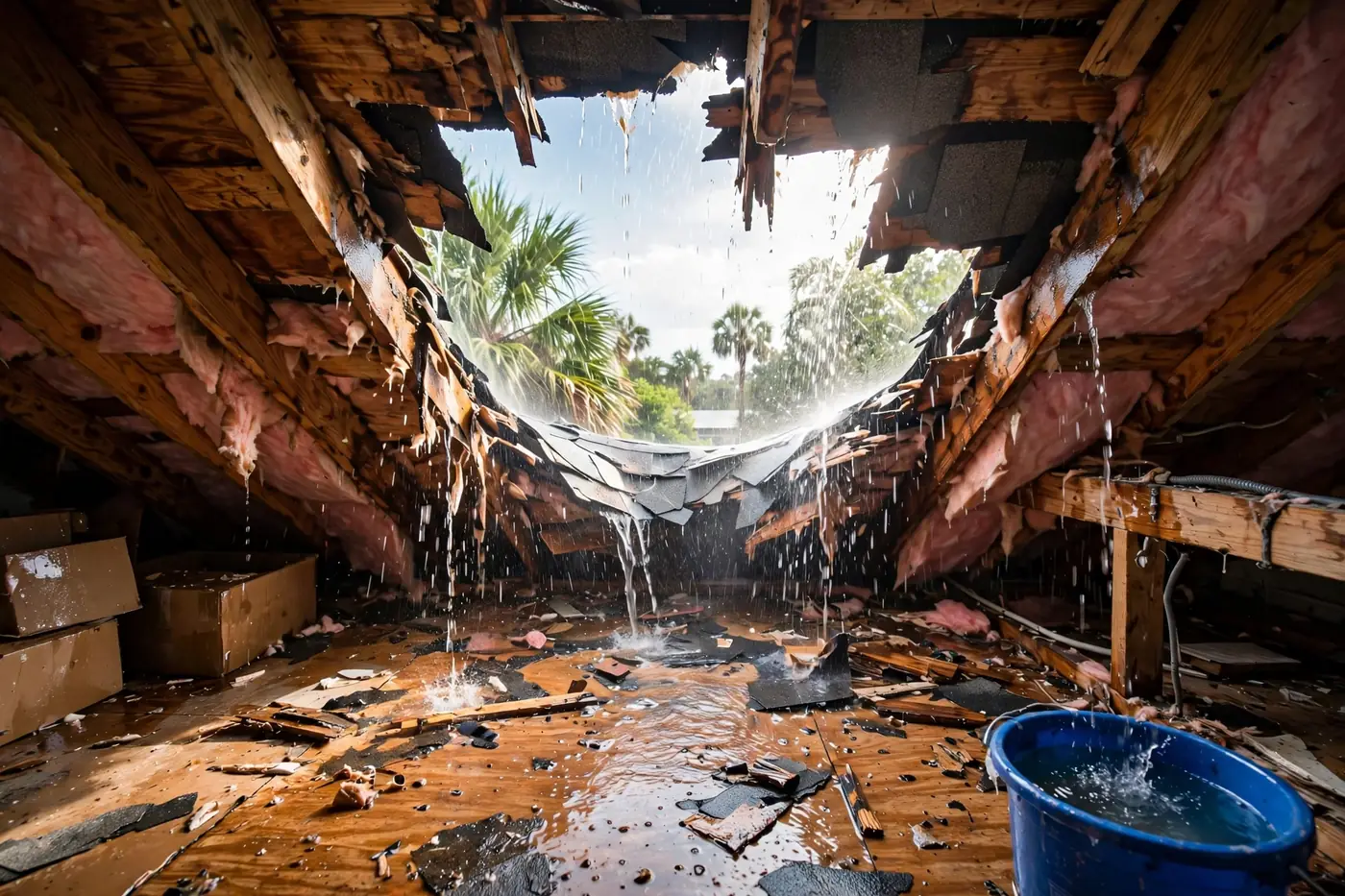
Wind is the second enemy. Even without a hurricane, Florida's summer thunderstorms bring gusty winds that lift shingles, especially along ridges and edges. Tropical storms and hurricanes do far worse, tearing off shingles, tiles, and flashing, and driving rain sideways under whatever remains. After any named storm passes near your part of Florida, assume roof damage until a professional inspection says otherwise. See storm water intrusion for the broader storm picture.
Flashing failures cause a large share of everyday leaks. Flashing, the metal strips sealing roof penetrations like vents, chimneys, skylights, and valleys, relies on sealant that deteriorates in heat. When flashing lifts or its sealant cracks, water runs straight into the attic with every rain. Clogged gutters contribute by forcing water to back up under shingles at the eaves. Tile roofs, common across South Florida and Southwest Florida, can leak when individual tiles crack or slip, exposing the underlayment beneath, which itself degrades with age and heat.
Flat and low-slope roofs, found on many Florida commercial buildings and some homes, pond water when drains clog. Standing water finds every seam weakness. And simple age matters: most shingle roofs in Florida last 15 to 20 years rather than the 25 to 30 advertised for milder climates, because heat accelerates every form of deterioration.
Signs of Roof Leak Water Damage Inside Your Home
Roof leaks announce themselves indoors, often far from the actual breach.
- Ceiling stains. Yellow-brown rings or blotches on ceilings are the signature sign. The stain's location rarely matches the roof breach directly, since water travels along framing before dripping.
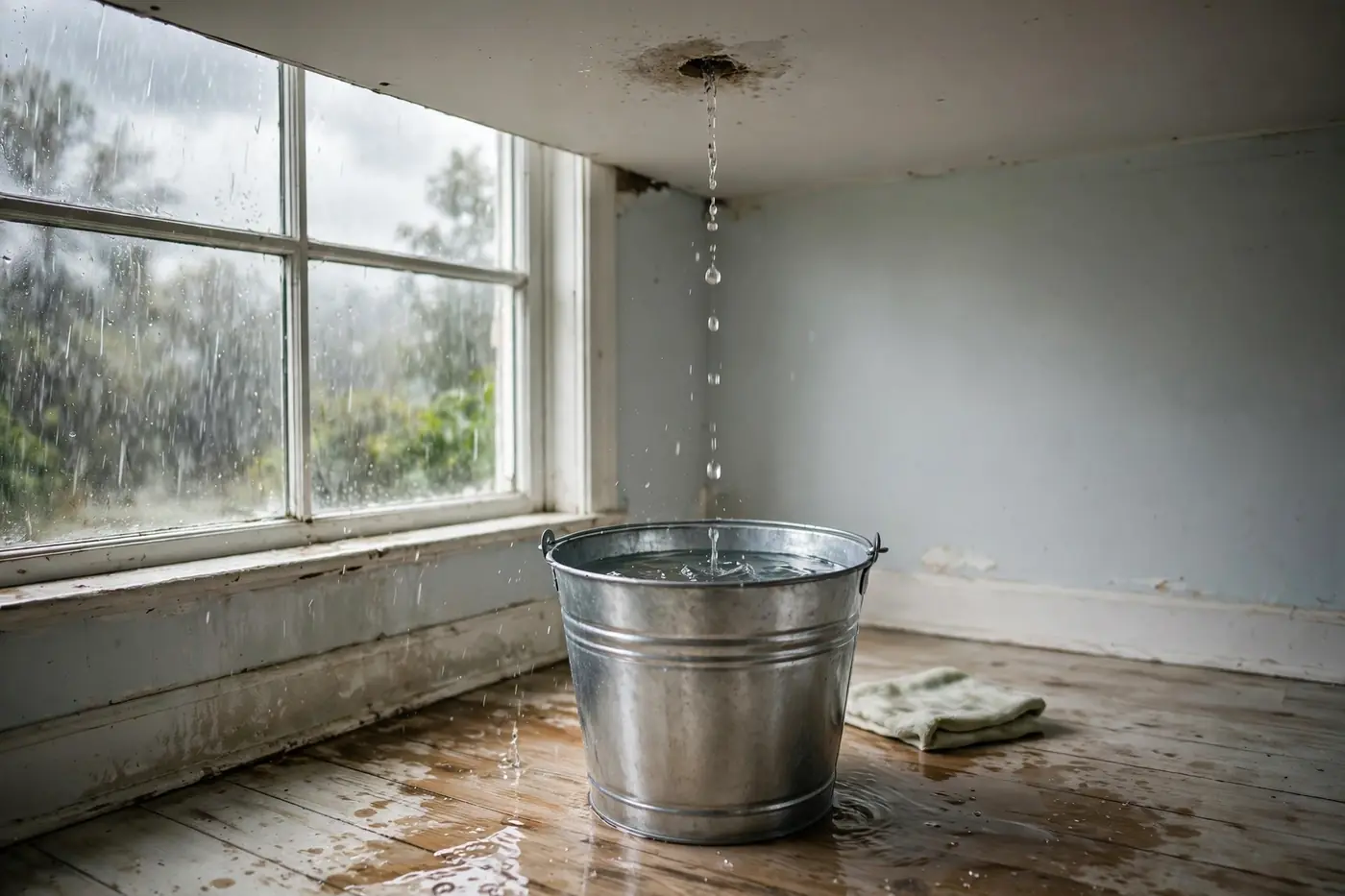
- Active dripping during rain. The obvious one. Note which rooms and whether it happens in every rain or only wind-driven rain, which helps roofers locate the breach.
- Peeling paint or bubbling on ceilings and upper walls. Moisture behind paint causes it to lift, often before a visible stain forms.
- Musty attic smell. A damp, musty odor in the attic or upper floor suggests chronic moisture, often with mold growth on the roof deck or insulation.
- Sagging or soft ceiling areas. Press gently, a ceiling that gives or feels spongy is saturated and may be close to collapse. Do not poke it.
- Wet or compressed attic insulation. If you can safely access the attic, look for damp, matted, or discolored insulation, and daylight visible through the roof deck.
- Exterior clues. From the ground with binoculars: missing or curled shingles, cracked tiles, rusted or lifted flashing, and granules collecting in gutters all predict leaks. Compare with signs of water damage for interior confirmation.
What to Do When Your Roof Leaks
Protect the interior first. The roof repair comes second.
- Contain interior water. Place buckets or bins under drips, lay towels along the drip path, and move furniture, electronics, and valuables. If a ceiling bulges, do not puncture it yourself unless you are prepared for a sudden release, and place a large container beneath it.
- Protect the attic if accessible. Lay plastic sheeting over stored items and, if you can do so safely, over the area where water is entering. Do not walk on a wet attic floor beyond the joists.
- Tarp the exterior only if it is safe. A properly secured tarp over the damaged area prevents further intrusion. Never climb onto a wet, steep, or storm-damaged roof. If conditions are unsafe, skip this step entirely and rely on interior containment.
- Document thoroughly. Photograph interior stains, drips, damaged belongings, and any visible exterior damage from the ground. Note dates and weather conditions. This supports insurance documentation, since roof leak claims often hinge on proving sudden damage versus wear.
- Call a roofer for the roof. A licensed roofing contractor finds the breach and makes permanent repairs. Temporary patches rarely survive Florida's next downpour.
- Call for interior water damage. Soaked insulation, drywall, and framing need professional attention. Wet attic insulation loses its effectiveness and must usually be removed and replaced. Water extraction and structural drying address what the roofer cannot: the moisture already inside your building.
After the roof is repaired, verify the interior is truly dry before closing walls or replacing insulation. Moisture meters, not touch, make that call. Our emergency checklist covers these steps in order.
Roof Leaks After Florida Storms
Post-storm roof leaks deserve special urgency.
After a hurricane or tropical storm, inspect for damage as soon as it is safe, even if you see no interior drips. Wind-driven rain exploits vulnerabilities that normal rain does not, and small breaches admit water with every subsequent thunderstorm. Many Florida homeowners discover storm roof damage weeks later when a routine afternoon storm produces a new ceiling stain, by which time mold has a head start.
Insurance considerations are sharper after storms. Florida policies often have separate, higher hurricane deductibles, and insurers scrutinize whether damage is storm-related or pre-existing wear. Document the storm date, photograph damage promptly, and consider a professional inspection report. Temporary emergency tarping may be reimbursable, so keep receipts.
| Roof type (Florida common) | Typical leak points | What to watch |
|---|---|---|
| Asphalt shingle | Aging shingles, flashing, valleys | Curling, missing shingles, granule loss |
| Concrete tile | Cracked or slipped tiles, underlayment | Broken tiles, deteriorated underlayment |
| Metal | Fasteners, seams, flashing | Loose fasteners, separated seams |
| Flat / low-slope membrane | Seams, drains, ponding areas | Standing water, clogged drains, seam gaps |
Preventing Roof Leaks in Florida
Roofs fail gradually, then suddenly. Inspections catch the gradual part.
- Inspect twice a year and after major storms. Spring and fall inspections, plus a check after any tropical system, catch lifted shingles, cracked tiles, and failing sealant early.
- Keep gutters and downspouts clear. Clogged gutters back water up under shingles and rot fascia. In Florida's leaf-shedding seasons, check quarterly.
- Maintain flashing and sealant. Have a roofer reseal flashing, vents, and skylights as sealant ages. This is inexpensive compared to interior water damage.
- Trim overhanging branches. Limbs rubbing shingles wear through granules, and falling branches puncture roofs during storms.
- Address attic ventilation and insulation. Proper ventilation reduces heat buildup that cooks shingles from below and helps the attic dry after minor intrusions.
- Plan for replacement on Florida timelines. Budget for shingle replacement around 15 to 20 years in Florida, not the 30 years quoted for cooler climates. An aging roof is a leaking roof waiting for the next storm.
Common Questions
Roof leaks usually appear or worsen during and after rain, while AC leaks correlate with cooling cycles regardless of weather. Stains directly below an attic air handler suggest the AC, while stains that appear after storms point to the roof. A professional inspection settles ambiguous cases.
Briefly, as an emergency measure, but not as a plan. Every rain adds moisture to insulation, drywall, and framing, and Florida humidity means mold can start within days. Temporary containment plus prompt roof repair and interior drying is the right sequence.
Sudden damage, such as from a storm, is often covered, while leaks from wear, age, or neglected maintenance frequently are not. Insurers look closely at roof condition and maintenance history. Document damage promptly and review your policy's roof and water damage terms.
Months or longer. Water entering an attic can soak insulation and the roof deck for a long time before staining appears on the ceiling below. Regular attic checks are the best early warning system.
Yes, potentially. A saturated ceiling can collapse without warning, bringing down heavy wet drywall and insulation. Keep people and pets away from the area, do not poke or press it, and get professional help promptly.
Both are needed for different jobs. Stop interior damage first with containment, then get the roofer to stop the intrusion and the restoration professional to dry and repair soaked interiors. They can often work in parallel once the immediate emergency is contained.
Related Water Damage Help
Roof leaks connect to several other guides: storm water intrusion for wind-driven rain, AC water leak for similar ceiling stains with a different cause, and mold growth for what follows an unrepaired leak. For services, see water damage restoration, structural drying, and the restoration process.
Need Help With Roof Leak Water Damage?
Call now for interior drying, ceiling and wall repair, and restoration anywhere in Florida.