✓
Assessment & source review
Part of the emergency water damage restoration in florida workflow, handled in a safety-first sequence.
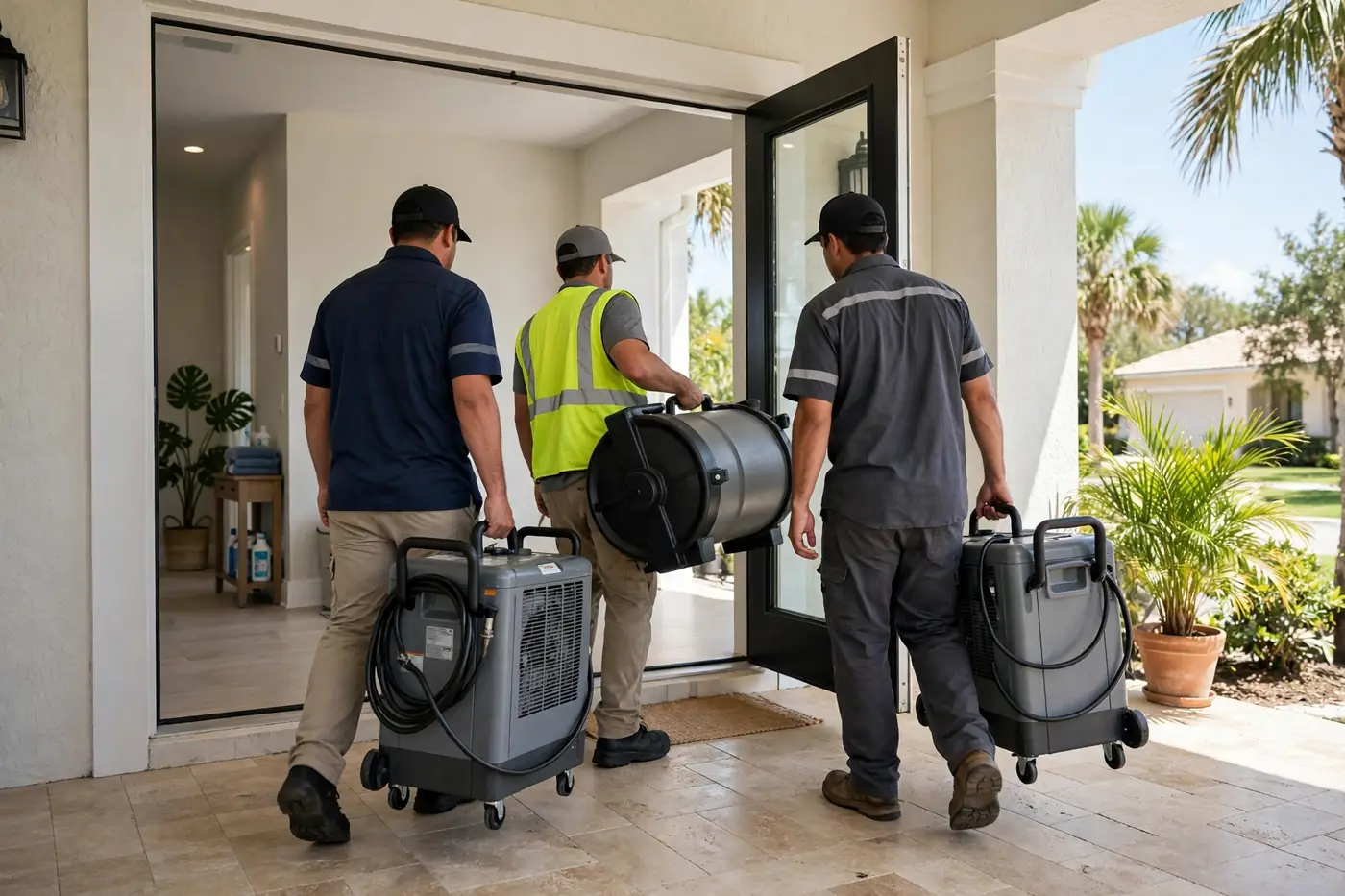
Coordinated assessment, extraction, structural drying, moisture monitoring and cleanup after a water loss.
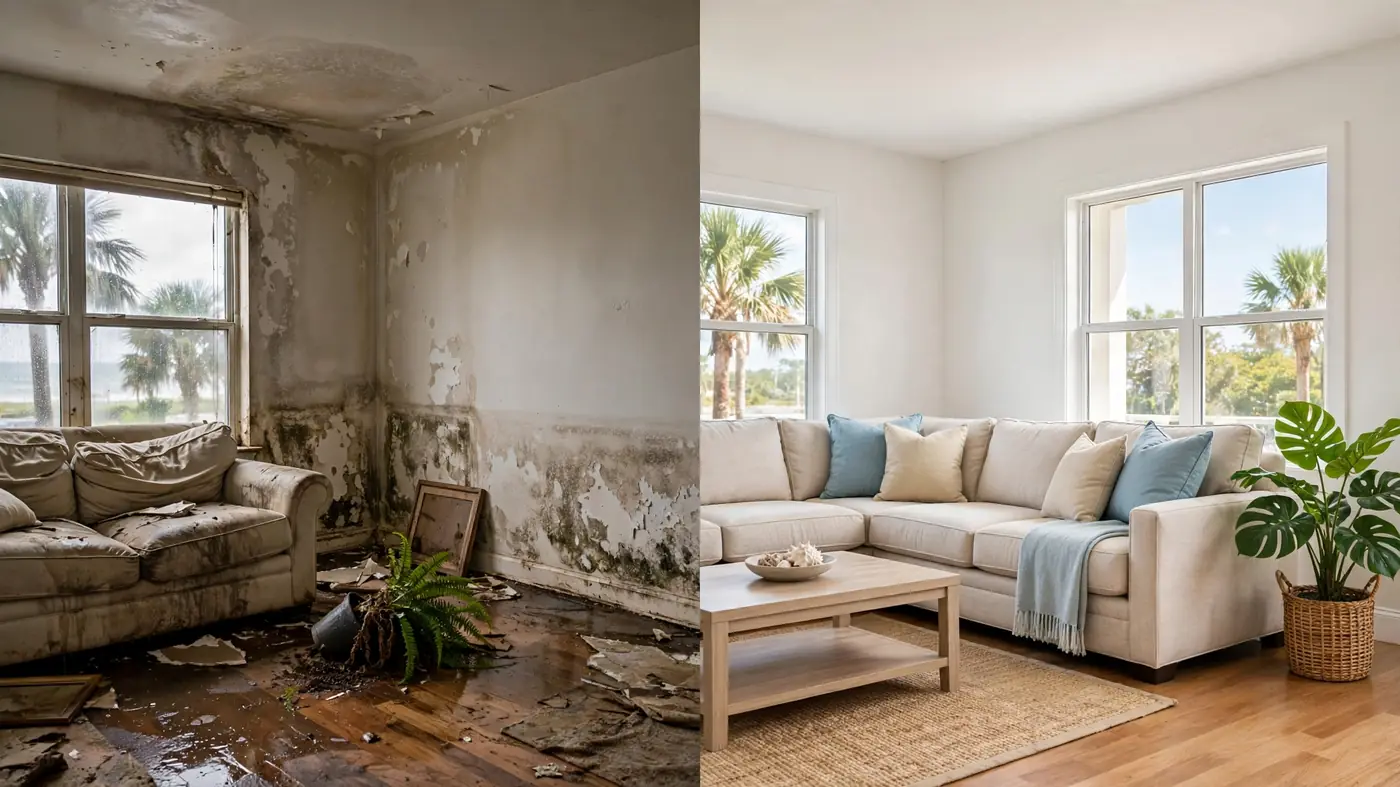
Water-loss response depends on the source, duration, affected materials and safe access to the property.
Part of the emergency water damage restoration in florida workflow, handled in a safety-first sequence.
Part of the emergency water damage restoration in florida workflow, handled in a safety-first sequence.
Part of the emergency water damage restoration in florida workflow, handled in a safety-first sequence.
Part of the emergency water damage restoration in florida workflow, handled in a safety-first sequence.
Protect people first, avoid unsafe electrical conditions, document the visible loss and seek appropriate restoration support.
Keep people away from dangerous areas and call 911 for immediate hazards.
Stop the water source only when doing so can be done safely.
Photograph visible damage and record the time, source and affected areas.
Move toward water removal, drying and moisture monitoring as soon as appropriate.
Rapid response pathways for active or spreading water damage.
View pageStanding-water removal and immediate moisture control.
View pageEquipment-based drying and moisture monitoring for affected materials.
View pageCleanup and drying planning after flood-related water intrusion.
View pageRemoval of unwanted water from accessible residential and commercial spaces.
View pageNot all water damage is the same, and restoration professionals classify every loss into one of three water categories defined by the IICRC S500 Standard for Professional Water Damage Restoration. The category determines the safety precautions, the cleaning protocol, and often the cost of the job.
Category 1, clean water, comes from sanitary sources such as a broken supply line or an overflowing sink. It starts out posing little health risk, but it does not stay clean for long. Category 2, gray water, contains significant contamination from sources like washing machines, dishwashers, and air conditioner condensate drains. Category 3, black water, is grossly contaminated and includes sewage backups and rising floodwater. Black water can carry bacteria, viruses, and other pathogens, and it demands full protective equipment and the removal of porous materials.
Here is the part Florida homeowners often miss: water categories degrade over time. Clean water sitting in a warm, humid home for 48 to 72 hours can become gray or even black as microbial growth takes hold. That is why fast water extraction matters so much, and why a sewage backup cleanup is handled as a completely different job from a supply line leak. If your loss involves rising water from outside, read our water damage vs flood damage guide, because floodwater brings separate insurance rules too. Skyfold Restoration connects you with local Florida teams 24/7 at (833) 606-6010, and the responding crew will identify your water category during the initial inspection.
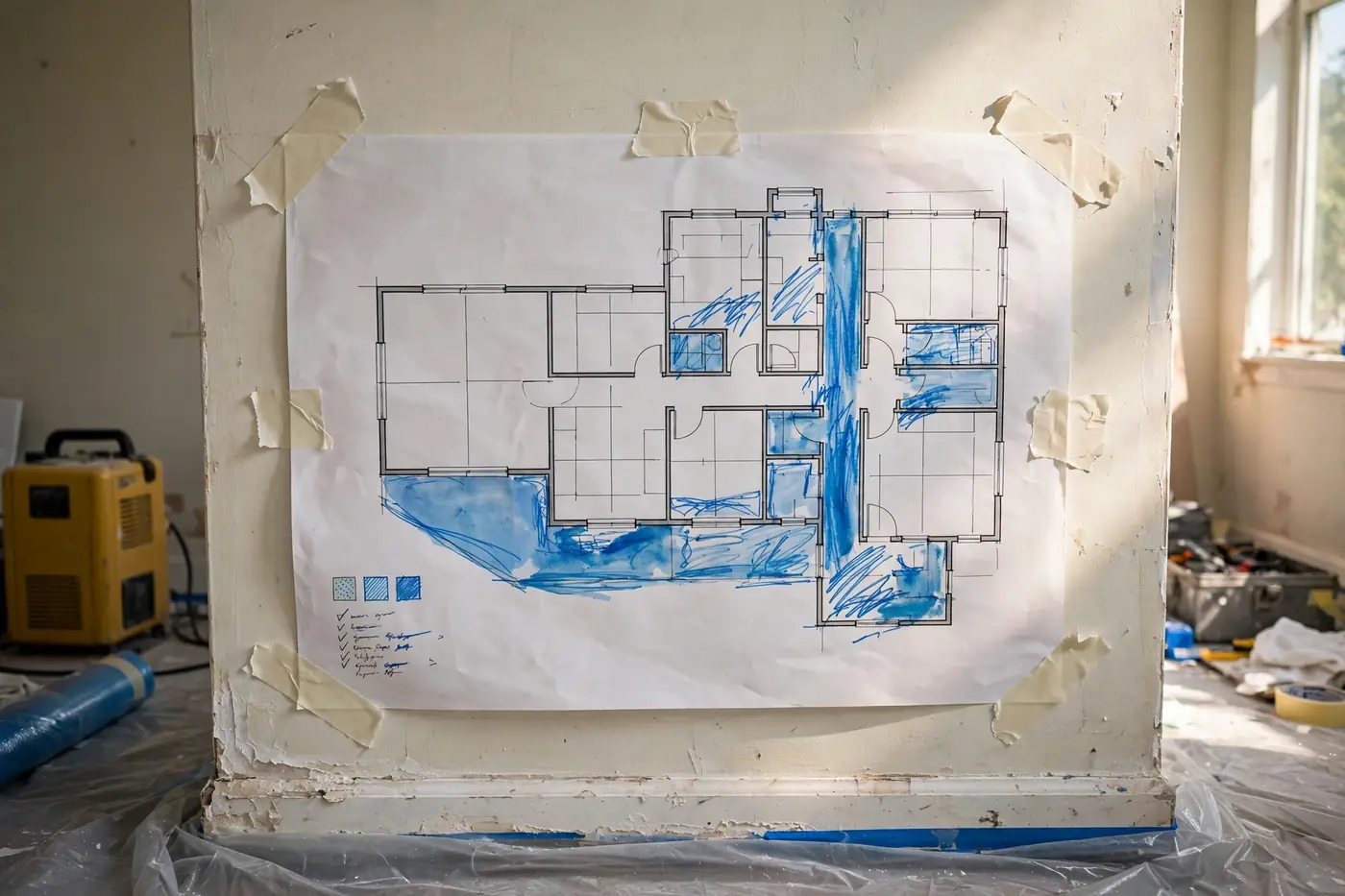
The water you can see is rarely the whole story. Water migrates behind drywall, under flooring, into subfloors, and along wall cavities, where it keeps damaging materials and feeding mold long after surfaces look dry. Professional crews find this hidden moisture with thermal imaging cameras, pin and pinless moisture meters, and hygrometers, then build a moisture map of every affected area before drying begins.
This step matters more in Florida than almost anywhere else. High indoor humidity, slab-on-grade construction, and a high water table mean moisture lingers and mold can start within 24 to 48 hours. Proper structural drying is not guesswork: technicians set drying goals based on the moisture content of unaffected materials in your home (the dry standard), place commercial air movers and dehumidifiers accordingly, and take daily readings until every material hits its target. Learn what structural drying involves so you know what a thorough job looks like.
When Skyfold connects you with a local restoration team, ask whether they provide moisture mapping and daily drying logs. Documented readings protect you twice: they prove the job was done completely, and they give your insurance adjuster the evidence needed to support the claim.
Call the existing Skyfold Restoration number or submit the request form with the property address and what happened.