Water Heater Leak in Florida
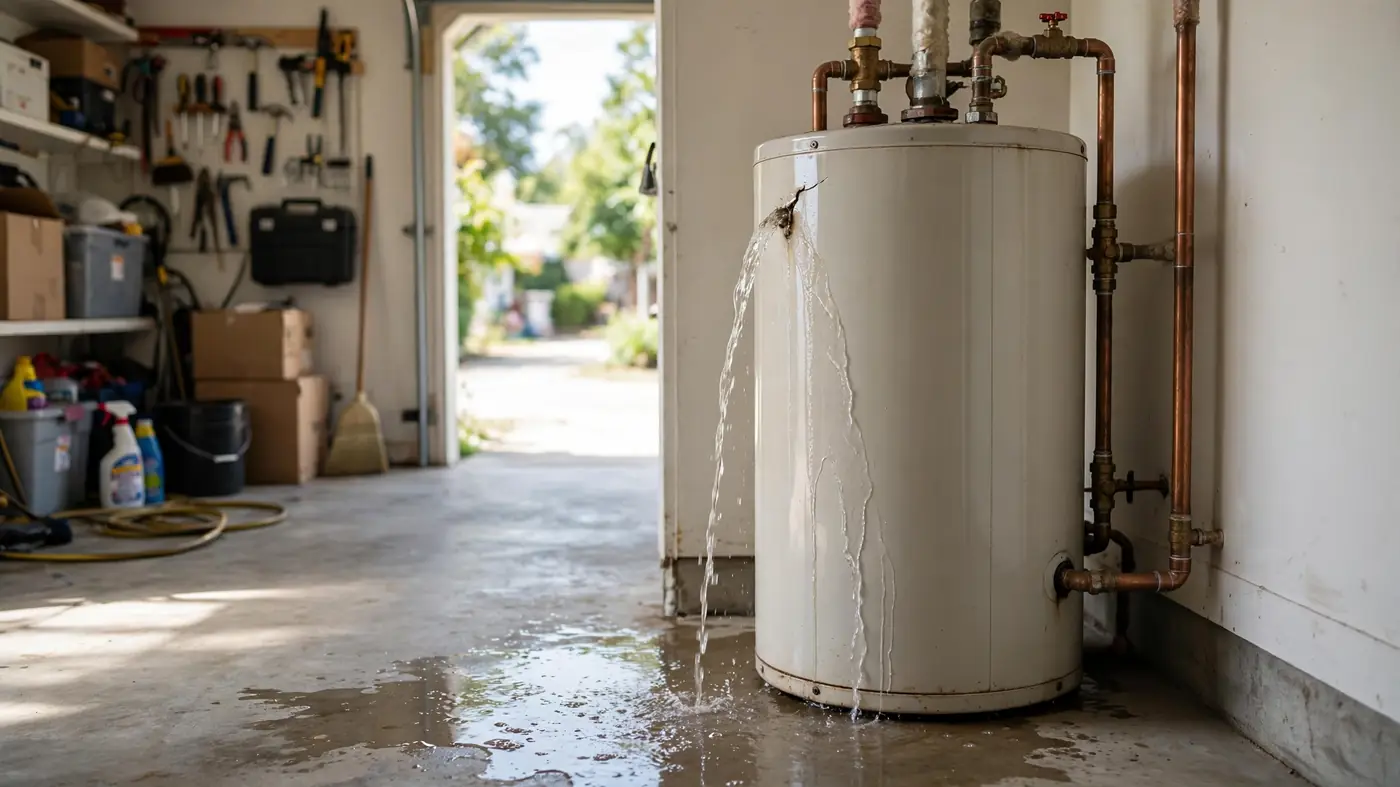
A water heater leak in Florida can release 40 to 80 gallons from the tank plus continuous supply-line flow, flooding garages, utility rooms, and adjacent living spaces. Tank corrosion, the leading cause, gives warning signs that many homeowners miss. This guide explains why water heaters leak, how to respond, and how to prevent the next one.
Fast Answer
If your water heater is leaking, turn off the cold water supply valve above the unit, then turn off power at the breaker for electric models or set gas models to pilot. Attach a hose to the drain valve and direct water to a floor drain if you can do so safely. Mop up standing water and call a plumber for the heater. For soaked flooring, walls, or large volumes, call for professional water extraction and drying.
Why Water Heaters Leak in Florida
Most water heater leaks are the final chapter of a long corrosion story.
The dominant cause is internal tank corrosion. Standard tank water heaters have a steel tank lined with glass, and a sacrificial anode rod that corrodes in place of the tank. In Florida, where many areas have hard or aggressive water chemistry, anode rods deplete faster, and once the rod is gone, the tank itself begins corroding. The glass lining inevitably develops micro-cracks over years of thermal expansion, exposing steel that rusts through. When the tank wall finally perforates, the leak starts small and grows, sometimes rupturing dramatically.
Florida conditions accelerate this timeline. Hard water in parts of Central Florida and Tampa Bay attacks anodes aggressively. High incoming water temperatures and heavy usage wear systems faster. And Florida garages, where most water heaters live, regularly exceed 90 degrees, keeping tanks hot and pressurized around the clock. The typical Florida tank water heater lasts 8 to 12 years, shorter than national averages, and leaks cluster heavily past year ten.
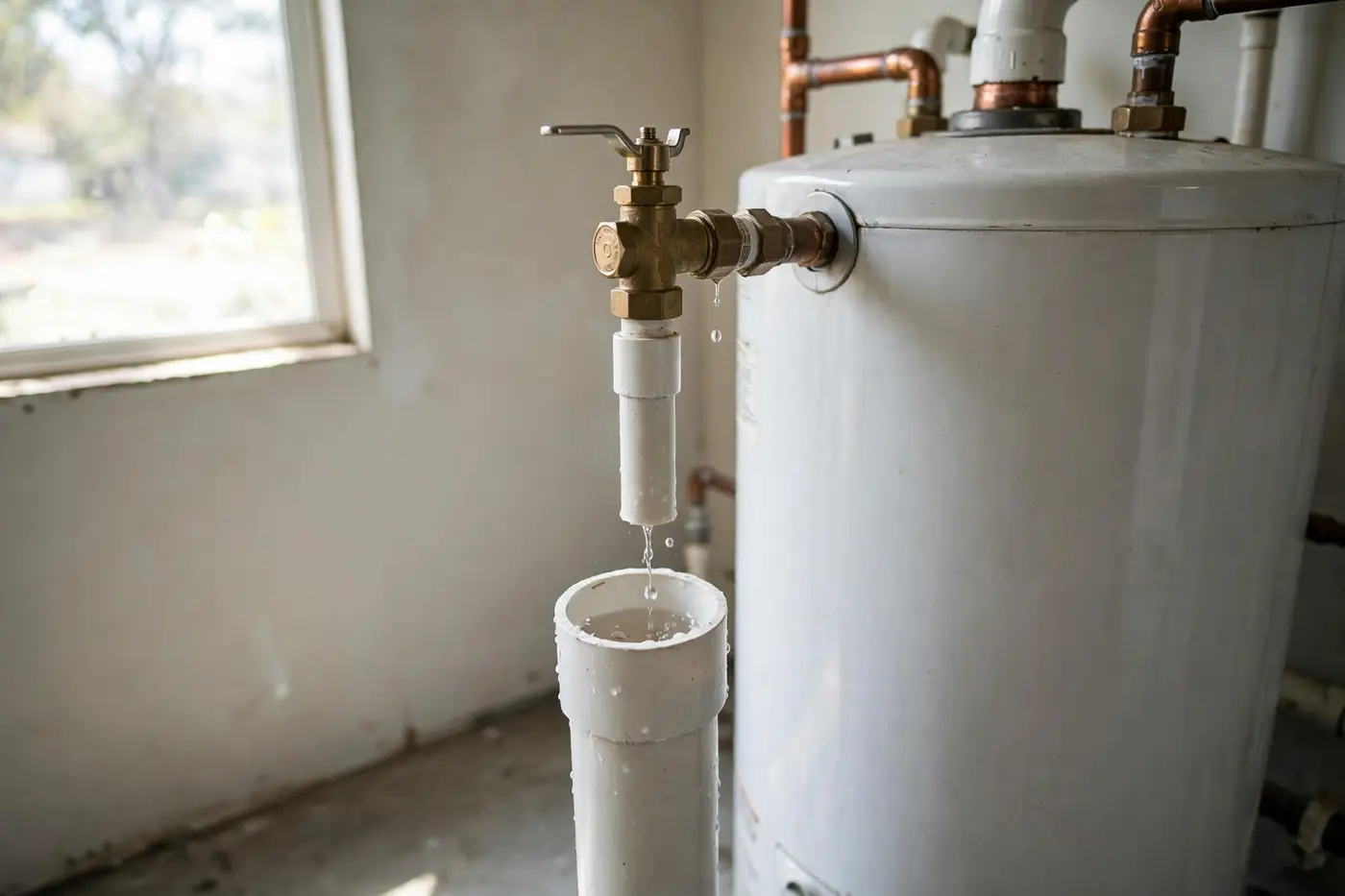
Other leak sources are more fixable. The temperature and pressure (T&P) relief valve can leak from excess pressure, thermal expansion without an expansion tank, or a failing valve. Inlet and outlet connections corrode and seep, especially with dissimilar metals. The drain valve can drip from sediment damage or a loose seal. Condensation on cold-water pipes or the tank in humid garages can mimic a leak, worth ruling out before assuming tank failure. A plumber can distinguish a repairable fitting leak from a dying tank, and the distinction matters enormously for your next step.
Warning Signs Your Water Heater Is Failing
Tanks rarely fail without warning. These signs precede most leaks.
- Rusty or discolored hot water. Brown or rusty tint from hot taps, especially after the water sits, signals internal tank corrosion. This is the clearest early warning.
- Moisture or small puddles around the base. Any water at the tank's base that is not explained by condensation deserves immediate investigation. Small seeps precede ruptures.
- Rust on the tank exterior, especially at the bottom. External rust, streaking, or corrosion around fittings indicates the tank is deteriorating.
- Rumbling or popping sounds. Sediment buildup on the tank bottom superheats and pops during heating cycles. Sediment accelerates corrosion and reduces efficiency.
- Water temperature fluctuations or reduced hot water. Failing heating elements or heavy sediment reduce performance before the tank leaks.
- Age over ten years. Check the manufacture date on the rating plate. A Florida tank past ten years without anode maintenance is living on borrowed time.
- Metallic smell or taste in hot water. Dissolving anode or corroding tank walls can affect water quality. Compare with signs of water damage for related moisture clues.
If you notice rusty hot water plus any moisture at the base, do not wait. That combination means the tank wall is compromised and failure can follow quickly.
What to Do When the Water Heater Leaks
Stop the water, kill the heat source, then manage the flood.
- Turn off the cold water supply. The shutoff valve sits on the cold inlet pipe above the heater. Turn it clockwise. This stops new water from feeding the leak, though the tank will continue draining its contents.
- Turn off the heat source. For electric heaters, switch off the dedicated breaker. For gas heaters, turn the gas control to pilot or off. Never work on a powered or gas-fed leaking heater.
- Drain the tank if safe. Attach a garden hose to the drain valve at the tank's base and run it to a floor drain or outside, then open the valve. Draining reduces the total water released and makes plumber access easier. If the drain valve is clogged with sediment, do not force it.
- Contain and remove standing water. Mop up, wet-vacuum, and move stored items in garages and utility rooms. Water heaters often sit near walls shared with living spaces, so check adjacent rooms for seepage.
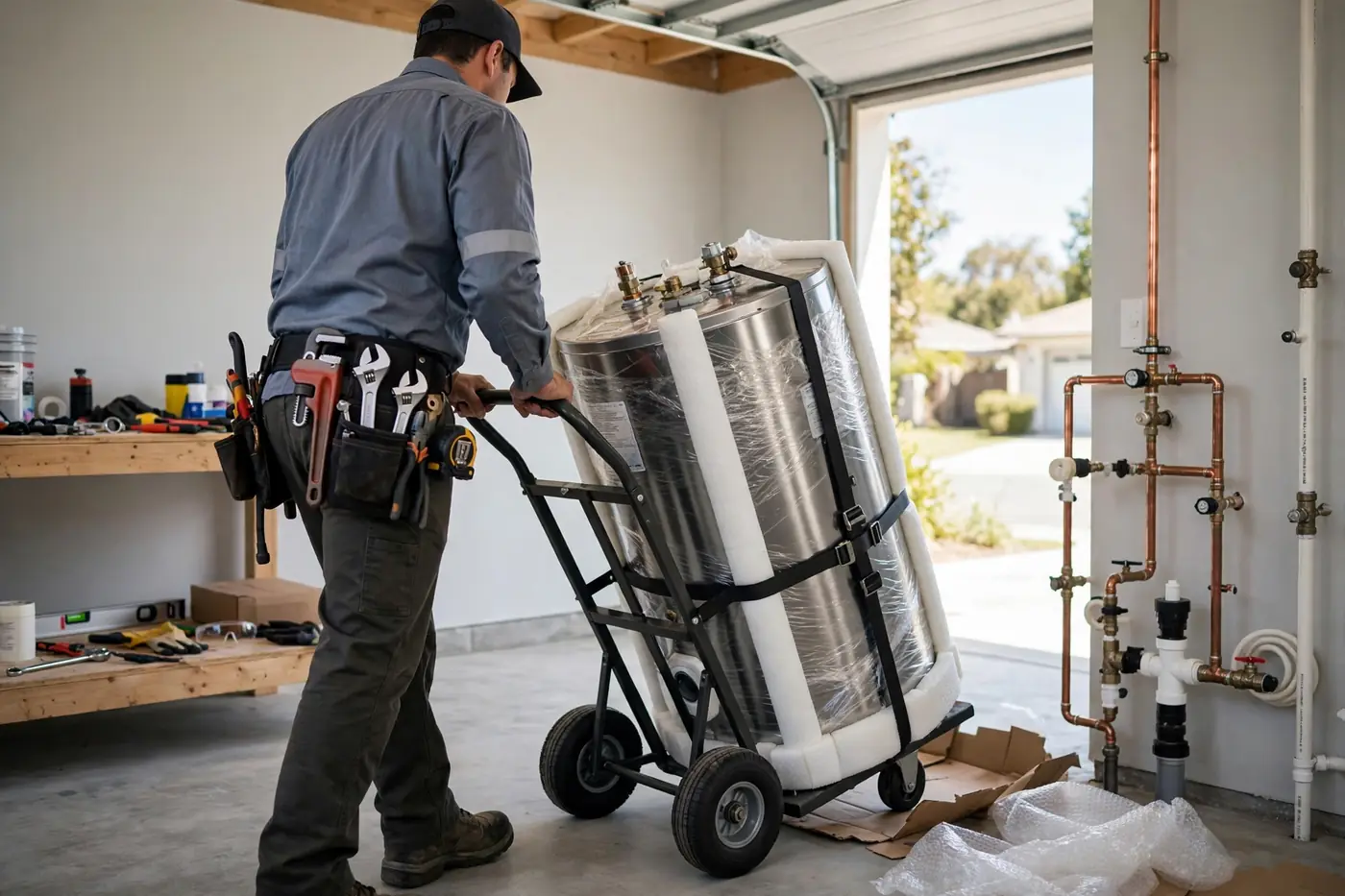
- Call a plumber. A leaking tank cannot be patched reliably, replacement is the standard fix. A plumber confirms whether the leak is the tank or a repairable fitting, and installs the replacement with proper pan, drain, and expansion tank.
- Address the water damage. Forty-plus gallons soak concrete, drywall, baseboards, and anything stored nearby. Professional water extraction and structural drying handle what mopping cannot, and in Florida humidity, prompt drying prevents mold growth.
- Document everything. Photograph the heater, the leak, all wet areas, and damaged belongings for insurance documentation.
| Leak location | Likely cause | Typical fix |
|---|---|---|
| Base of tank, rusty water | Tank corrosion failure | Replace the water heater |
| T&P relief valve discharge pipe | Excess pressure or bad valve | Check pressure, expansion tank, replace valve |
| Top fittings or connections | Corroded fittings, loose connections | Repair or replace fittings |
| Drain valve | Sediment damage, loose seal | Replace drain valve |
| Condensation on tank or pipes | Humid garage air | Insulate pipes, improve ventilation |
Preventing Water Heater Floods in Florida
Water heater floods are among the most preventable plumbing disasters.
- Replace aging tanks proactively. In Florida, plan replacement around 10 years, not 15. A planned Saturday replacement beats an emergency midnight flood.
- Install a drain pan with a drain line. Code requires pans in many installations, but older heaters often lack them. A pan piped to a drain or the exterior contains small leaks and routes water visibly.
- Add a water alarm or auto-shutoff. Inexpensive leak sensors beside the heater alert you at the first seep. Automatic shutoff valves close the supply when they detect water, ideal for heaters in living-adjacent spaces.
- Maintain the anode rod. Have it checked every few years and replaced when depleted. This single maintenance item most extends tank life in Florida water conditions.
- Flush sediment annually. Draining a few gallons yearly reduces sediment buildup that causes popping, inefficiency, and accelerated corrosion.
- Check the T&P valve yearly. Lift the test lever briefly to verify it opens and reseats. A working relief valve prevents dangerous pressure buildup.
- Insulate and ventilate the space. Pipe insulation reduces condensation in humid garages, and ventilation keeps the area drier overall.
When replacing, consider whether a tankless unit suits your home. Tankless heaters eliminate tank-rupture floods entirely, though they have their own maintenance needs. Discuss options with a licensed plumber. For related plumbing risks, see burst pipe water damage and slab leak water damage.
Common Questions
A leaking tank itself cannot be reliably repaired and should be replaced. Leaks from fittings, valves, or connections are often repairable. A plumber can determine which you have, and the distinction decides between a repair visit and a replacement.
Typically 8 to 12 years for standard tank models, shorter than national averages due to hard water, heat, and heavy use. Past ten years, budget for replacement and watch closely for the warning signs above.
It can be. Water near electrical connections is a shock hazard, gas models add combustion concerns, and a failed T&P valve with excess pressure is dangerous. Turn off power or gas, do not touch electrical components while wet, and call professionals.
Sudden tank failures are often covered for the resulting water damage, though the heater replacement itself may not be. Gradual leaks from neglected maintenance are less likely to be covered. Document everything and review your policy.
The anode rod is a metal rod inside the tank that corrodes sacrificially, protecting the steel tank from rust. In Florida's water conditions it depletes faster. Checking and replacing it every few years is the most effective way to extend tank life.
Annual partial flushing reduces sediment buildup that causes noise, inefficiency, and accelerated corrosion. If the heater is very old and never been flushed, consult a plumber first, since disturbing heavy sediment can occasionally cause valve issues.
Related Water Damage Help
Water heater issues connect to: water heater leak service details, burst pipe water damage for supply-line failures, and slab leak water damage for hidden pipe leaks. For recovery, see water extraction, structural drying, and what to do when you find water damage.
Need Help With a Water Heater Leak?
Call now for water extraction, drying, and restoration anywhere in Florida.