
Serving All of Florida – 24/7 Emergency Line[email protected](833) 606-6010
Skyfold Restoration FL
Water damage resource

Water Damage Restoration Cost

How much does water damage restoration cost in Florida? The honest answer is that it depends on the water type, the area affected, and the materials involved. This guide explains every cost factor in plain language, what drives prices up or down, how insurance fits in, and how to get an accurate scope for your specific situation, without invented price lists.
Calculator and bills beside moisture-damaged wall
Fast answer: Water damage restoration cost varies widely. A small clean-water cleanup in one room often costs far less than a large sewage-affected restoration spanning multiple rooms. The biggest cost drivers are the water contamination category, the square footage affected, the materials involved (drywall and flooring add up fast), and how long the water sat before response. The only way to get an accurate number is an on-site inspection with moisture mapping and a line-item scope. Start by understanding the restoration process so you know what you are paying for.
Cost factors

What Determines Restoration Cost

Every estimate is built from the same set of factors. Understanding them helps you read any quote critically.

  • Water category. Category 1 (clean supply-line water) is the least expensive to handle. Category 2 (gray water) adds cleaning steps. Category 3 (sewage or floodwater) is the most expensive because porous materials it touches generally must be removed and strict safety procedures apply.
  • Area and volume. More square footage means more extraction, more drying equipment, longer monitoring, and more repair work. Multi-room losses scale faster than single-room ones.
  • Materials affected. Drywall, insulation, carpet and pad, hardwood, cabinetry, and tile each have different drying or replacement costs. Kitchens and bathrooms, with their cabinetry and tile, tend to cost more per square foot than open living areas.
  • How long water sat. Water discovered in minutes is cheaper to resolve than water discovered in weeks. Time lets moisture migrate into framing and subfloors and invites mold, expanding the scope.
  • Access and demolition needs. Water trapped in wall cavities or under built-ins may require controlled demolition to reach, adding labor and rebuild cost.
  • Contents. Cleaning, moving, or replacing damaged belongings adds a separate cost layer from the structure itself.
  • Location and timing. Emergency after-hours response and widespread storm events can affect availability and scheduling, though the core scope of work remains the driver.
Up or down

What Drives Cost Up or Down

Two homes with the same leak can have very different bills. Here is why.

FactorDrives cost downDrives cost up
Water typeClean supply-line waterSewage or floodwater contamination
Discovery speedFound and stopped within hoursHidden for days or weeks
Area sizeSingle room, containedMultiple rooms or whole floor
FlooringTile over slab, easily driedHardwood or carpet over wood subfloor
WallsSurface drying sufficientInsulation and framing soaked, demolition needed
ContentsFew affected belongingsExtensive furniture and electronics affected
MoldNone, fast dryingEstablished growth requiring remediation steps
ResponseProfessional extraction within hoursDelayed response, DIY attempts that spread moisture

The pattern is consistent: fast professional response to clean water in a small area is the least expensive scenario, while delayed response to contaminated water across large areas is the most expensive. Everything else falls between.

Honest ranges

Typical Cost Ranges, Honestly Stated

We do not publish fake exact prices. Here is how scenarios honestly compare, in relative terms.

  • Small, clean-water incidents (for example, a supply line caught quickly in one room) are typically the least expensive jobs: fast extraction, a few days of drying, and minor repairs.
  • Moderate incidents (multiple rooms, or water that sat long enough to require some drywall or flooring removal) typically cost several times more than small ones, because demolition and rebuild enter the picture.
  • Large or contaminated losses (sewage backup, major flooding, or whole-floor saturation) are typically the most expensive, combining extensive removal, longer drying, content handling, and full rebuild of affected areas. Our sewage backup guide explains why this category is different.
  • Mold remediation, when needed, is priced as its own scope on top of drying, driven by the affected area and containment requirements.

Beware of anyone quoting a firm price from photos alone or over the phone without moisture mapping. Real scopes are built from measured moisture, material assessment, and line items, which is exactly what our insurance documentation process produces. A quote that cannot explain its own line items is not a quote you can trust.

Insurance

How Insurance Interplays With Cost

Insurance does not change what the work costs, but it changes what you pay out of pocket.

  • Deductible first. You pay your deductible before coverage applies. Know whether your standard or hurricane deductible is in play for storm-related losses.
  • Covered versus excluded. Sudden and accidental water damage is commonly covered; gradual damage, maintenance issues, and flood (rising exterior water) are commonly excluded. The coverage decision can swing your out-of-pocket cost from a deductible to the full bill.
  • Actual cash value versus replacement cost. Some policies pay depreciated value for older materials, others pay full replacement. This affects repairs, not the drying scope.
  • Emergency mitigation is usually covered. Reasonable emergency steps to prevent further damage, like extraction and drying, are typically part of a covered claim. Document everything.
  • Supplements happen. If drying reveals hidden damage, the scope and the claim can be supplemented. This is normal and another reason complete documentation matters.

For the full picture, read does homeowners insurance cover water damage in Florida.

Accurate scope

How to Get an Accurate Scope (and Quote)

A trustworthy estimate has these hallmarks. Accept nothing less.

  1. On-site inspection with moisture mapping. Meters and thermal imaging, not guesses. The scope should reference measured wet areas.
  2. Line-item breakdown. Extraction, equipment, monitoring visits, demolition, cleaning, and repairs listed separately, so you can see what each phase costs.
  3. Water category stated. The category should be identified and reflected in the approach, especially for anything beyond clean water.
  4. Drying plan with verification. Equipment placement plus a monitoring schedule, with completion tied to meter readings.
  5. Written, not verbal. A real scope is a document you can compare against the adjuster's estimate and keep in your claim file.

Get the scope before authorizing major demolition, and share it with your adjuster early. Misalignment between contractor scope and adjuster estimate is a top source of claim friction, and early comparison prevents it.

Smart savings

Saving Money Without Cutting Corners

The cheapest restoration is the one done right the first time.

  • Respond fast. Speed is the single biggest cost saver. Hours matter more than haggling.
  • Do not skip the moisture map. Drying blind leads to callbacks, mold, and paying twice.
  • Separate drying from repairs in your thinking. Drying is urgent and technical; cosmetic repairs can sometimes be phased. A good scope distinguishes them.
  • Document everything yourself too. Your photos and notes cost nothing and protect the claim that pays for the work.
  • Avoid the cheapest unscoped bid. A low bid without moisture mapping and line items usually means scope gaps you will pay for later, either out of pocket or through a denied supplement.
Ask first

Questions to Ask Any Restoration Company About Cost

These questions separate scoped, verifiable work from vague promises.

  1. Will you map moisture with meters before quoting? If the answer is no, the quote is a guess.
  2. Is this a line-item scope? You want extraction, drying, monitoring, demolition, cleaning, and repairs broken out, not a single lump sum with no detail.
  3. What water category are you treating this as, and why? The answer should reference what was observed, and it should match the safety procedures proposed.
  4. How will you verify drying is complete? Look for meter readings against dry standards, not a fixed number of days.
  5. What happens if hidden damage is found during drying? A professional explains the supplement process upfront rather than surprising you later.
  6. How do you document for insurance? Photos, moisture logs, and scopes should be standard deliverables, since they protect both the work and your claim.
  7. What is excluded? Honest scopes state what is not included, such as full rebuild finishes or content replacement, so nothing is assumed.

Companies comfortable with these questions tend to produce the documentation, verifiable drying, and clean claims that cost less in the end, even when their initial scope is not the lowest number you hear.

FAQ

Restoration Cost: Frequently Asked Questions

How much does water damage restoration cost in Florida?

It varies too widely for an honest single number. Small clean-water incidents are the least expensive; large or sewage-affected losses are the most expensive, with moderate multi-room jobs in between. An on-site inspection with moisture mapping and a line-item scope is the only way to get an accurate figure for your situation.

What is the most expensive part of water damage restoration?

Usually the combination of demolition and rebuild after contaminated or long-soaked losses. Drying itself is technical but bounded; rebuilding kitchens, bathrooms, or whole floors is where costs climb.

Does homeowners insurance pay for water damage restoration?

Often yes for sudden and accidental losses, minus your deductible. Gradual damage, maintenance failures, and flood are commonly excluded. The coverage decision is the biggest variable in what you personally pay.

Why did I get wildly different quotes for the same job?

Because scopes differ. One quote may include full moisture mapping, monitoring, and verified drying while another prices a quick fan placement and patch. Compare line items and methodology, not just totals, and ask how each bidder verified the moisture scope.

Is it cheaper to handle small water damage myself?

For truly minor clean-water spills, DIY cleanup can work. But if drywall, subfloors, or wall cavities got wet, or if you are unsure, professional moisture verification is inexpensive insurance against hidden mold and rot that cost far more later.

Do I have to pay extra for emergency or after-hours service?

Emergency response may carry different scheduling terms than standard appointments, but the core scope of work, extraction, drying, repairs, is priced on the job itself. Ask for the scope in writing either way.

How can I keep restoration costs down?

Respond within hours, insist on moisture mapping before demolition, keep drying and repair scopes distinct, document everything for insurance, and choose scoped, verifiable work over the lowest unscoped bid.

Keep learning

Related Water Damage Guides

Want an Accurate Scope, Not a Guess?

Call now for an on-site inspection with moisture mapping and a line-item scope you can trust.

Deeper guide

What Actually Drives Water Damage Restoration Cost in Florida

Ask ten companies about water damage restoration cost and you will get ten ranges, because cost is driven by variables no one can price over the phone honestly. Understanding those variables helps you read any estimate critically and avoid both lowball quotes that balloon later and inflated ones.

The five cost drivers

First is water category. Clean water from a supply line costs the least to handle. Gray water from appliances costs more because of sanitizing. Black water from sewage or flooding costs the most because porous materials must be removed, not dried. Second is square footage affected, which sets equipment counts and labor hours. Third is material type: drying tile on concrete is fast, saving soaked hardwood or plaster is slow and labor-heavy. Fourth is demolition extent, removing and replacing drywall, insulation and flooring adds rebuild cost beyond the dry-out. Fifth is timing: losses addressed within hours stay small, losses found after a week of vacation are a different project entirely.

Typical Florida cost ranges

Small clean-water extractions with a few days of drying often land in the low thousands. Multi-room losses with drywall removal and rebuild commonly reach into five figures. Sewage backups and whole-home flood events go higher because of disposal, sanitizing and reconstruction. These are honest ranges, not quotes. Your exact number comes from an on-site scope with moisture mapping.

Getting an honest estimate

A trustworthy estimate lists line items: extraction, equipment days, demolition square footage, materials removed and rebuild scope. Vague lump sums deserve questions. We scope every job with photos and readings so you see exactly what you are paying for. Call (833) 606-6010 for an on-site assessment anywhere in Florida.
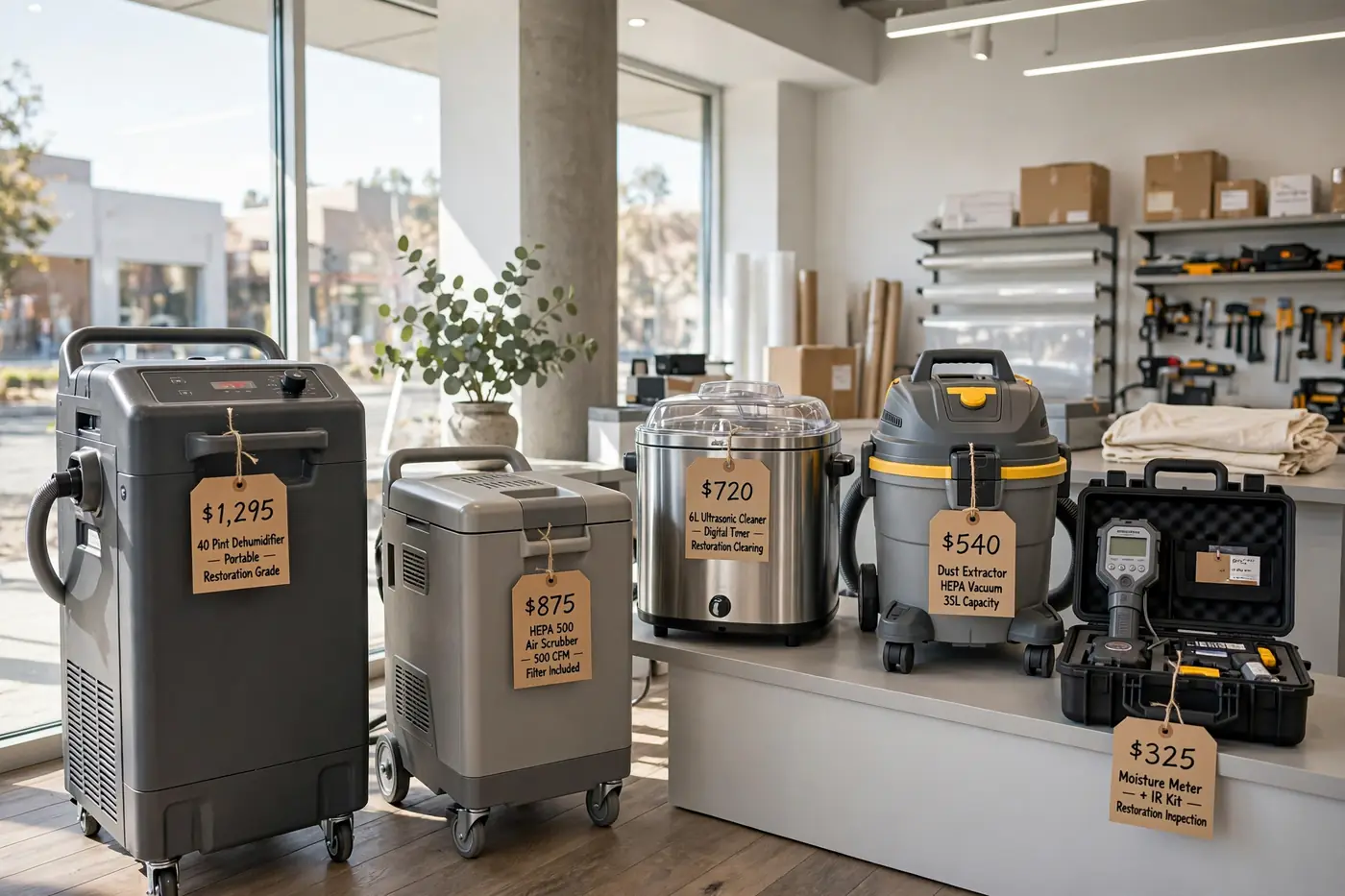

Price tags on restoration equipment
Stacked coins with house model behind