• Florida water, fire, mold & storm restoration
  • 2247 NW 3rd St, Miami, FL 33125
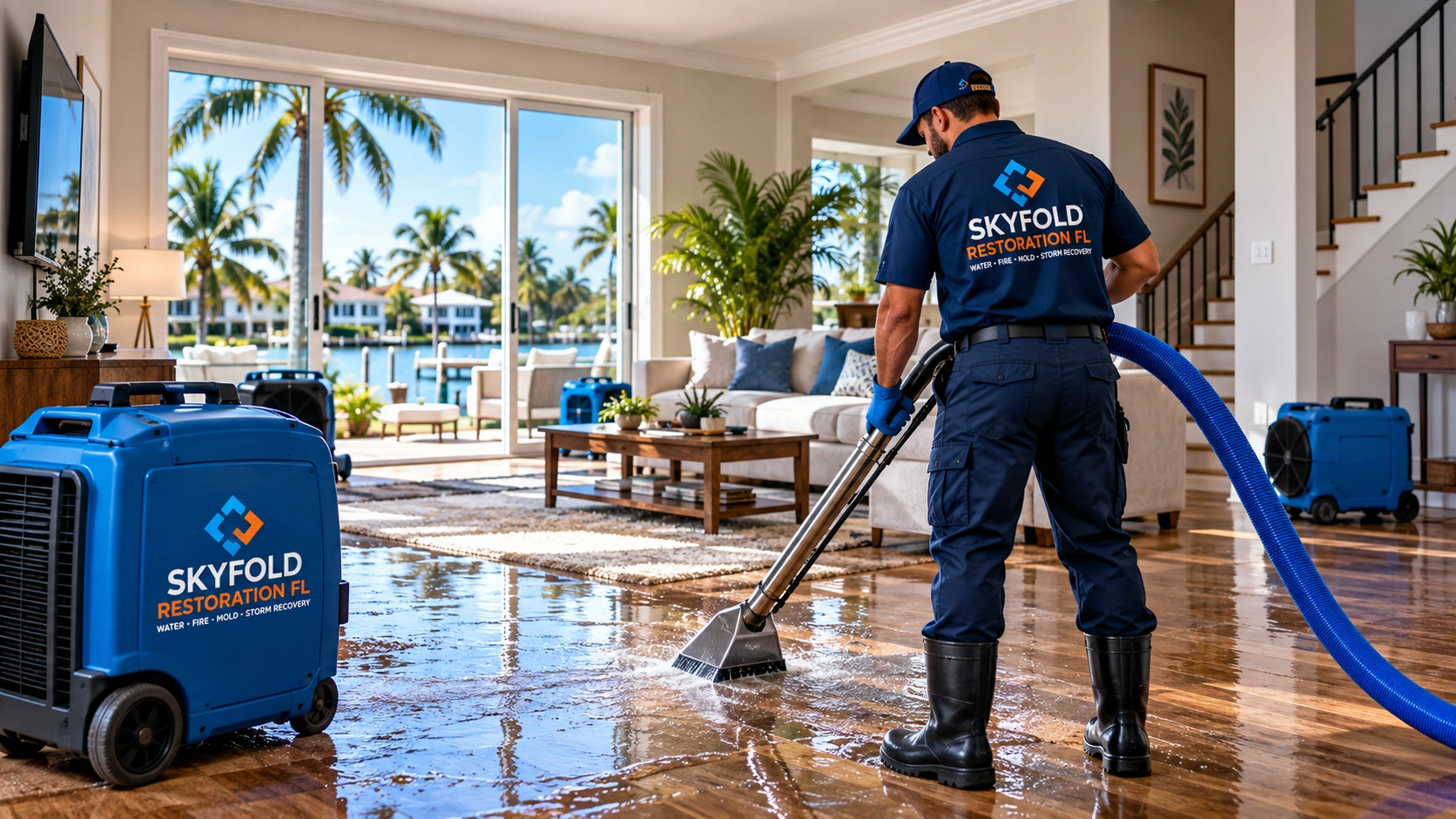
Water damage restoration technician assessing a flooded interior

Emergency Water Damage Restoration

Emergency Water Damage Restoration in Florida

When water is actively spreading, standing inside a property, reaching electrical areas, or coming from an unknown or contaminated source, the priority is not cosmetic cleanup. The priority is safety, source control, water removal, drying, documentation, and deciding what needs professional restoration next.

After-hours availability and property-specific service coverage should be confirmed when you call. No guaranteed response time is promised on this page.

Emergency water damage restoration Florida is intended for urgent water losses where safety, active water, contamination or spreading moisture need prompt attention.

WHAT TO DO NOW

What should you do during a water emergency?

First, protect people - not the building. Stop or isolate the water source only when it can be done without exposure to electrical or structural hazards. Keep occupants away from unsafe areas, avoid contaminated water, document visible damage when it is safe, and arrange professional assessment when the loss is active, extensive, contaminated, or affecting hidden building components.

Once emergency help is contacted, the restoration pathway may include an initial safety assessment, source control, water extraction, moisture inspection, containment, structural drying, dehumidification, cleaning, contents handling and repairs or reconstruction where appropriate. The exact sequence depends on what caused the loss, how far water traveled, what materials were affected and whether the water is contaminated.

About Skyfold Restoration

A Restoration Company Built Around Experience and Clear Next Steps

Skyfold Restoration provides restoration guidance and property recovery services for water damage and related losses across Florida. Our approach starts with safety and source control, then moves through water extraction, moisture assessment, structural drying, cleaning, contents care and repair decisions based on the actual condition of the property.

20 years of restoration experience. Skyfold Restoration brings two decades of restoration experience to residential, multifamily and commercial property needs. That experience helps keep the response focused on what matters after a loss: identifying the source, understanding how far moisture has traveled, protecting affected materials and determining which parts of the property can be restored versus repaired or rebuilt.

Every water loss is different. A burst pipe in a finished room, a roof intrusion during a storm, a sewage backup, a flood event or water introduced after a fire can require different safety and cleanup decisions. Our process is designed to match the response to the source, contamination level, materials affected and condition of the building rather than treating every loss as the same.

Skyfold Restoration serves Florida through a regional and city-based coverage structure. A location page describes service coverage for that market and does not by itself represent a physical office at every listed location. Property-specific availability is confirmed when service is requested.

Water DamageExtraction, moisture assessment, structural drying and dehumidification.
Property RestorationFire, smoke, mold, storm, contents and reconstruction support when applicable.
Florida CoverageRegional and city coverage with property-specific availability confirmed before service.

Emergency decision guide

The Details That Change an Emergency Water Response

The same amount of visible water can create very different restoration needs. The source, contamination level, materials, hidden moisture, property type and safety conditions should all be considered before deciding what happens next.

01

Is the water still active?

An uncontrolled leak, burst pipe or ongoing storm intrusion can require source control before extraction and drying can be planned. A stopped loss still needs assessment when materials remain wet.

02

What kind of water is involved?

Clean-looking water is not automatically safe. Sewage, floodwater and other contaminated sources can change the cleanup approach, protective measures and material decisions.

03

Where is the moisture hiding?

Visible standing water may disappear before wall cavities, insulation, subfloors, cabinets or other concealed areas are dry. Moisture mapping and measurement help identify what the eye cannot show.

04

What does the property need next?

A residence may need contents handling and localized drying. A business may need a different access plan, affected-area separation, documentation and business-continuity considerations.

05

What should be documented?

Photos, videos, the suspected source, affected rooms, damaged contents and the actions already taken can make the restoration history easier to understand and hand off to the appropriate stakeholders.

06

When is DIY no longer appropriate?

Electrical hazards, contaminated water, structural concerns, unknown sources and concealed moisture are examples of situations where professional assessment should take priority over improvised cleanup.

Urgent water loss support

Emergency Water Cleanup, Extraction and Removal

People may search for emergency water cleanup, urgent water extraction, emergency water removal or 24 hour water damage help when a property is suddenly affected. These phrases describe the urgency of the situation, but the correct response still depends on the source, safety conditions and the condition of the building.

Emergency water cleanup

Cleanup can include water removal, affected-material assessment, drying, cleaning and sanitation when appropriate.

Urgent water extraction

Extraction focuses on reducing the volume of water present so the property can move into assessment and structural drying.

Emergency water removal

Water removal is only one stage of the response. Hidden moisture, humidity and material conditions still need to be considered after visible water is gone.

Emergency water damage restoration Florida: a useful search phrase for urgent losses where active water, contamination, safety hazards or spreading moisture need prompt attention.

24 hour water damage: often describes an urgent restoration need outside normal business hours. Property-specific availability should be confirmed through the contact path.

Emergency water extraction: removes bulk water so the property can move into moisture assessment and structural drying.

Urgent water damage cleanup: should account for the source, contamination, materials and hidden moisture, not just visible water.

Emergency property restoration: may involve water, fire, smoke, mold, storm or contents-related work depending on the loss.

First-hour guidance

What To Do During a Water Damage Emergency

These steps are intentionally conservative. Only take actions that can be completed without entering an unsafe area or exposing yourself to water, electricity, sewage, structural movement or other hazards.

01

Stop the source when safe

For a controllable plumbing or appliance leak, isolate the water source only if you can reach the shutoff without stepping into unsafe water or dismantling equipment. For an unknown source, major break or infrastructure problem, use the appropriate qualified party.

02

Keep people out of unsafe areas

Children, pets and occupants should stay away from standing water, damaged ceilings, unstable flooring, active electrical hazards and areas affected by sewage or unknown contamination.

03

Treat electrical risk seriously

Water near outlets, wiring, appliances or electrical panels can create shock and fire hazards. Do not enter or touch electrical equipment in wet conditions. Power isolation should only be attempted when the panel can be reached safely; otherwise use a qualified electrician or emergency authority.

04

Protect contents only when safe

Move documents, electronics, artwork and other important items away from water only when doing so does not require entering a hazardous area. Do not risk injury to save belongings.

05

Take photos and video

Document the water source if known, affected rooms, visible damage and damaged contents. Photograph conditions before major cleanup when it is safe and practical to do so.

06

Record the basic facts

Note when the loss was discovered, where the water came from, what rooms are affected, whether the source is still active and whether sewage, floodwater or other contamination may be involved.

07

Get the right type of help

Active leaks, standing water, contaminated water, hidden moisture, widespread saturation or water affecting electrical and mechanical systems generally require more than surface cleaning.

08

Do not delay an unsafe situation

If the property appears unsafe to occupy, leave the affected area or property as directed by emergency officials, utilities or qualified professionals. Water damage can involve hazards beyond what is visible.

Important: CDC and OSHA guidance warns that floodwater and flood-damaged areas can involve electrical, structural, biological and chemical hazards. Never drive or walk through dangerous floodwater to reach a property, and do not enter an area that is unsafe to access. CDC floodwater safety · OSHA flood response

Avoid secondary damage

What Not To Do After Water Damage

A water emergency can become more complicated when a property owner tries to solve an electrical, contamination, structural or concealed-moisture problem with the wrong equipment or technique.

Safer actions

  • Document visible conditions when it is safe.
  • Keep people away from contaminated or electrically unsafe areas.
  • Protect high-value documents and contents only when safe.
  • Contact the appropriate restoration, plumbing, electrical, roofing or emergency authority based on the source.
  • Follow your insurer's instructions on documentation and claim reporting.

×Avoid these mistakes

  • Do not enter standing water near electrical equipment.
  • Do not disturb sewage or other visibly contaminated water.
  • Do not use household electrical equipment in wet areas.
  • Do not mix cleaning chemicals or improvise chemical treatments.
  • Do not assume the visible dry surface means the wall cavity or subfloor is dry.
  • Do not remove large amounts of material before conditions are documented unless safety requires it.
  • Do not walk under a ceiling that is sagging or visibly unstable.

Common triggers

Types of Emergency Water Losses

The right emergency response depends on the source, duration, contamination, spread and materials involved - not simply on how much water is visible.

P

Plumbing emergencies

Burst pipes, failed supply lines, leaking valves and sudden plumbing failures can release water quickly and push it under flooring, into walls or through multiple rooms.

Burst pipe water damage →
A

Appliance failures

Washing machines, dishwashers, refrigerator water lines and water heaters can create concentrated losses that spread farther than the original leak point suggests.

Washing machine water damage →
AC

AC / HVAC leaks

Condensate and HVAC-related water can appear around ceilings, closets, floors or mechanical areas. Repeated moisture needs source identification, not just surface drying.

AC / HVAC water leak →
S

Roof and storm intrusion

Wind-driven rain, roof failures and storm-related openings can introduce water into attics, ceilings, insulation and wall assemblies while the source is still active.

Roof leak water damage →
F

Flooding

Heavy rainfall, rising water and storm-related flooding can create unsafe conditions, contaminated water and damage across larger parts of a property.

Flood damage restoration →
C

Sewage and contaminated water

Sewage backups and contaminated water require different handling from a clean plumbing leak because the concern is not only moisture but also contamination exposure.

Sewage cleanup →
W

Walls, ceilings and floors

Ceiling leaks, wall saturation, flooring damage, wet insulation and subfloor moisture may continue even after standing water is removed.

Ceiling water damage →
SH

Unknown or recurring leaks

A repeated stain, damp smell or moisture pattern can indicate concealed water, a slow plumbing source, roof intrusion or an HVAC issue that needs investigation.

View water damage problems →
HW

Water affecting systems

When water reaches electrical, mechanical, insulation or structural areas, the emergency is broader than removing visible water from the floor.

Structural drying →

Choose the next step

Emergency Water Damage vs. Other Restoration Services

Emergency restoration is the starting point for a water loss. The specific service combination depends on what happened after the initial assessment.

Sewage Cleanup

Used when the water is contaminated and requires specialized cleanup and material decisions.

Explore sewage cleanup →

Storm / Hurricane Damage

Relevant when wind, rain or tropical systems cause water intrusion or related property damage.

Explore storm restoration →

Mold Remediation

Addresses confirmed or suspected mold conditions after moisture has remained or mold has developed.

Explore mold remediation →

Reconstruction

May follow mitigation when building materials require repair or the property needs rebuilding.

Explore reconstruction →

After you contact Skyfold

What Happens After You Contact Skyfold Restoration

Not every water emergency follows the same path. The steps below describe the normal decision flow without promising an exact response time or a fixed scope of work.

1

Initial information

Basic facts are gathered: property type, source, affected areas, whether the water is active, and whether safety or contamination concerns are present.

2

Urgency and safety review

The situation is considered in context. Electrical, structural, flood, sewage or other hazards may change how the property can be approached.

3

Site assessment

The affected area can be assessed for visible water, moisture spread, building materials, concealed moisture and the likely source of the loss.

4

Source control

Where applicable and within scope, the active source is isolated or coordinated with the proper trade or authority before restoration continues.

5

Water extraction

Bulk water may be removed using appropriate extraction methods selected for the volume, location and material conditions.

6

Moisture inspection

Moisture mapping and measurement help identify the parts of the structure that still need attention after visible water is gone.

7

Containment where appropriate

Depending on the loss, containment may be used to separate affected areas or control work zones and cross-contamination concerns.

8

Drying and dehumidification

Air movement and humidity control can support structural drying. Equipment placement and duration depend on measured conditions.

9

Monitoring

Drying is not judged only by how a surface feels. Measurements can be repeated to confirm progress and identify hidden moisture.

10

Cleaning and contents

Cleaning, sanitation, deodorization or contents handling may be appropriate depending on the source and condition of the affected materials.

11

Repair decisions

Materials that cannot be restored may require controlled removal. Repair or reconstruction is considered after the mitigation needs are understood.

12

Closeout

The objective is to leave the property with a documented path from emergency stabilization through drying, cleaning and the next repair decision.

Technical response

Why Moisture Assessment Matters After the Water Is Gone

Visible water is only one part of a loss. Professional assessment looks at where moisture moved, what it reached, and whether conditions are improving as drying continues.

Moisture mapping

Mapping helps define the affected area instead of treating the first visible wet spot as the entire loss. It can guide where drying attention is needed and where follow-up measurements should be taken.

  • Walls: moisture can extend beyond the visible stain.
  • Floors: water can move below finished flooring.
  • Ceilings: trapped moisture may remain after the surface appears better.

Measurement and thermal inspection

Moisture meters and, where appropriate, thermal imaging can help identify temperature or moisture patterns that are not obvious to the eye. These tools inform decisions; they are not substitutes for professional interpretation.

  • Material moisture: supports drying decisions.
  • Relative humidity: helps assess the drying environment.
  • Concealed areas: can reveal a need for deeper investigation.

Air movement and dehumidification

Drying is a controlled process. Air movement can help move moisture from materials into the air, while dehumidification can reduce moisture in the drying environment so evaporation can continue.

  • Equipment: should be placed for the affected layout.
  • Humidity: should be monitored rather than guessed.
  • Progress: should be checked as conditions change.

Drying verification

The goal is not simply to make the room feel dry. It is to document improvement toward appropriate material and environmental conditions, especially where wall cavities, subfloors, insulation or other concealed areas may have been affected.

  • Repeat measurements: show direction and progress.
  • Material comparison: can help identify remaining concerns.
  • Hidden moisture: should not be ignored because the visible floor is dry.

Material-specific damage

What Water Can Do to Different Building Materials

Material behavior varies. Decisions depend on the type of water, duration, swelling, contamination and whether the material can be safely dried and restored.

Material / areaEmergency concernWhat assessment looks at
Drywall / gypsumSwelling, staining, weakened seams and moisture inside wall assemblies can develop after saturation.Extent of wetting, swelling, condition of seams, cavity moisture and whether controlled drying or removal is appropriate.
CarpetWater can travel into backing and below-floor materials, and contaminated water changes the cleanup decision.Water category/source, backing condition, pad, subfloor, contamination and dryability.
Hardwood / laminateWood can swell, cup or warp; laminate components may react differently depending on construction and exposure.Moisture profile, swelling, affected substrate and whether controlled drying is feasible.
Tile / resilient flooringThe visible finish may look intact while water is present below the surface.Underlayment, subfloor moisture, grout/joint areas and adjacent materials.
CabinetsWater can enter toe-kicks, backs, side panels and concealed voids.Source path, swelling, material construction, hidden moisture and whether components can be dried or need repair.
InsulationPorous insulation can retain moisture and may not be suitable for simple surface drying in every loss.Type of insulation, contamination, saturation, accessibility and condition.
Wood framingFraming can retain moisture after the surface appears dry.Accessible measurement locations, drying progress and whether moisture remains elevated.
SubfloorsSubfloor moisture can remain hidden beneath carpet, flooring, cabinets or finishes.Moisture beneath the finished surface and the extent of secondary impact.
ContentsDocuments, electronics, furniture and personal property can be affected differently.Material type, contamination, value, cleanability, drying requirements and whether pack-out is appropriate.

EPA guidance notes that water-damaged materials should be dried promptly and that porous materials may require removal when moldy or otherwise not reasonably restorable. EPA mold and moisture guidance.

Property type

Residential and Commercial Water Emergencies

An emergency loss in a home and an emergency loss in a business can begin the same way, but the practical consequences can be very different.

Residential Water Damage Emergencies

Homes, condos, apartments and townhomes may experience burst pipes, appliance leaks, water heater failures, toilet overflows, roof leaks or storm intrusion. The response often needs to account for living areas, bedrooms, personal contents, flooring, cabinets, wall assemblies and occupants who may need to stay safely away from the affected area.

  • Identify the source and whether it is still active.
  • Separate safe areas from wet or contaminated areas.
  • Protect important contents only when safe.
  • Assess walls, floors, ceilings and hidden moisture.
  • Plan drying before deciding what needs repair.

Commercial Water Damage Emergencies

Offices, retail spaces, restaurants, hotels, medical properties, warehouses and multifamily buildings can face operational disruption in addition to property damage. The response may need access planning, affected-area isolation, contents handling and a path that limits unnecessary interruption while keeping people out of unsafe areas.

  • Identify critical areas and business continuity concerns.
  • Separate affected and unaffected spaces where appropriate.
  • Coordinate contents, equipment and access considerations.
  • Document conditions and mitigation activities.
  • Use the dedicated commercial restoration pathway when applicable.

Commercial Restoration →

Florida context

Why Water Emergencies Can Behave Differently Across Florida

Florida properties can encounter plumbing losses, heavy rainfall, tropical systems, wind-driven rain, flooding and high humidity. The local context matters, but the response should still be driven by the actual loss at the property.

South Florida

Urban density, heavy rain, tropical weather and roof or exterior water intrusion can create fast-moving property losses.

South Florida restoration →

Central Florida

Homes and businesses may see plumbing failures, storm intrusion and heavy-rain events where moisture can reach multiple materials.

Central Florida restoration →

Tampa Bay

Storm and rainfall exposure can combine with roof, exterior and interior water issues. Property-specific assessment still determines the restoration path.

Tampa Bay restoration →

Southwest Florida

Flooding, tropical systems, wind-driven rain and plumbing losses can all create urgent moisture conditions across homes and commercial properties.

Southwest Florida restoration →

Polk / Inland Florida

Inland properties can still face heavy rainfall, flooding and water intrusion even away from the coastline.

Polk / Inland Florida →

North & Northwest Florida

Rainfall, tropical weather, flooding and plumbing losses can affect properties from the Panhandle through North Florida.

North & Northwest Florida →
Storm note: NOAA's National Hurricane Center notes that tropical cyclones can produce torrential rainfall and inland flooding, and storm surge can travel inland. During an active flood or storm, follow local emergency instructions and never enter unsafe floodwater merely to inspect damage. NOAA/NHC hurricane hazards.

Insurance and records

What To Document During a Water Emergency

Documentation can help create a clear record of what happened and what was affected. Coverage decisions remain a matter between the customer, the policy and the insurer.

  • Date and time: when the damage was discovered and, when known, when the water event started.
  • Source: burst pipe, appliance, roof, storm, sewage, flood or unknown source.
  • Photos and video: show the source, standing water, affected rooms, walls, ceilings, floors and contents when safe.
  • Affected rooms: record where water traveled, not just where the original leak began.
  • Damaged contents: note furniture, electronics, documents and other personal property affected.
  • Actions taken: record source isolation, emergency contacts and other safe steps already completed.
  • Mitigation records: keep invoices, work records and relevant communications when provided.

Decision support

When Should You Treat Water Damage as an Emergency?

Not every damp spot requires the same urgency. The indicators below can help a property owner recognize when the situation needs prompt professional attention or emergency safety support.

Emergency indicators

  • Water is actively spreading or cannot be controlled safely.
  • Standing water is present across occupied areas.
  • Water has reached outlets, electrical equipment or mechanical systems.
  • The water may be sewage or otherwise contaminated.
  • A ceiling, wall or floor shows signs of saturation or instability.
  • Water has entered multiple rooms or hidden building assemblies.
  • There is wet insulation, significant subfloor moisture or widespread saturation.
  • The source is unknown, recurring or difficult to isolate.
  • A storm or flood has introduced water into the property.

When a non-emergency evaluation may fit

  • The source has been fully controlled and no active water is spreading.
  • Only a small, clearly understood area is affected.
  • No electrical, structural or contamination concern is present.
  • The property is safe to occupy while an evaluation is arranged.
  • A recurring moisture mark still needs investigation even if no water is visible.

A non-emergency situation can still become serious when hidden moisture is left unresolved. The key question is not simply “How much water can I see?” but “Where did the water go?”

DIY boundary

Emergency Water Damage Restoration vs. DIY Cleanup

A property owner can often document conditions and take limited, safe protective steps. The line changes when electricity, contamination, structural stability, concealed moisture or specialized drying is involved.

Reasonable owner actions

Take photos, protect contents when safe, record the source, keep people away from unsafe zones and follow your insurer's documentation instructions.

Professional territory

Extraction, concealed-moisture assessment, drying strategy, contaminated-water cleanup, large-scale demolition, structural access and equipment-dependent drying can require professional judgment and controls.

When to stop DIY work

Stop when water is near electricity, floodwater is contaminated, the building appears unstable, mold is widespread, you cannot identify the source or the drying problem extends behind finished materials.

Contamination boundary: EPA recommends professional help when water or mold damage is associated with sewage or other contaminated water. Florida also regulates mold-related services through DBPR, including mold assessor and mold remediator license types. Florida DBPR mold-related services.

Planning

What Affects Emergency Water Damage Restoration Cost?

Emergency restoration is not a flat-rate service because each water loss has a different source, footprint, material condition and drying requirement.

Amount of water

Bulk water volume and how far it traveled influence extraction needs and cleanup time.

Source and contamination

Clean plumbing water, floodwater and sewage do not carry the same handling requirements.

Affected materials

Drywall, flooring, cabinets, insulation, contents and structural materials can react differently.

Area and accessibility

Large, confined or difficult-to-access spaces can change the assessment and equipment plan.

Drying complexity

Wall cavities, subfloors, high humidity and concealed moisture can extend the drying path.

Contents

Special handling, cleaning, drying, storage or pack-out needs can add scope to a loss.

Demolition

Material removal may be necessary when materials are not reasonably restorable or access is required.

Reconstruction

Repair and rebuilding are distinct from the initial mitigation work and depend on the final condition.

Monitoring duration

Drying plans can require repeated measurement and equipment adjustment as conditions change.

This page does not publish a flat-rate estimate or guaranteed price. For planning guidance, see water damage restoration cost factors →.

Full restoration pathway

Related Skyfold Restoration Services

The emergency page stays focused on triage. These service pages provide the deeper detail once the immediate situation is understood.

Water Extraction

Focused on removing standing and bulk water from affected areas.

Water extraction →

Flood Damage Restoration

For flood-related water loss and associated property impacts.

Flood restoration →

Fire Damage Restoration

Relevant when water damage follows firefighting or suppression activities.

Fire restoration →

Smoke Damage Restoration

Addresses smoke-related impacts when water and fire events overlap.

Smoke cleanup →

Soot Cleanup

For soot and particulate cleanup following fire-related losses.

Soot cleanup →

Mold Remediation

For confirmed or suspected mold conditions requiring remediation.

Mold remediation →

Mold Inspection

For situations where mold-related assessment is the immediate question.

Mold inspection →

Biohazard Cleanup

For biological or hazardous contamination scenarios outside a standard clean-water loss.

Biohazard cleanup →

Hurricane Damage Restoration

For tropical-system losses involving water intrusion and related damage.

Hurricane restoration →

Emergency Roof Tarping

For situations where a roof opening needs temporary stabilization to limit additional intrusion.

Emergency roof tarping →

Pack-Out & Storage

For controlled handling, transport or storage of affected contents when applicable.

Pack-out & storage →

Reconstruction

For repair and rebuilding after mitigation identifies the remaining property damage.

Reconstruction →

Local service architecture

Florida Emergency Water Damage Coverage

Skyfold's Florida location architecture is organized by region and city. A location page is not a claim that there is a physical office in every market. Service availability should be confirmed for the specific property.

Florida Locations

Browse the statewide location hub, city pages and coverage directory.

Florida locations →

Priority City Pages

Connect emergency search intent to local city coverage without turning the emergency page into a city keyword list.

Miami →

Emergency Guidance

For first actions and general help outside this service page, use the water-damage help hub and emergency guide.

Water damage help →

Common emergency questions

Emergency Water Damage Restoration FAQs

Answers start with the immediate decision, then explain the reasoning. Property conditions can change the appropriate response.

What should I do first after a water emergency?
Protect people first, isolate the water source only if safe, keep occupants away from hazardous areas, document the damage when safe and arrange the appropriate emergency help. Do not enter water near electrical equipment.
What counts as an emergency water damage situation?
Active or rapidly spreading water, standing water, contaminated water, water near electrical systems, major ceiling or wall saturation, storm or flood intrusion, widespread moisture, an unknown source or a recurring leak can all justify urgent assessment.
Do I need to leave the property?
Leave the affected area or property when there is a serious electrical, structural, gas, flood or contamination hazard, or when emergency officials or qualified professionals direct you to do so. This page does not determine whether a particular property is safe to occupy.
What if water is near electrical outlets?
Treat the area as an electrical hazard. Do not touch wet electrical equipment or enter standing water to reach it. Power isolation should only be attempted from a location that can be accessed safely; otherwise use a qualified electrician or appropriate emergency authority.
Can I use a household wet/dry vacuum?
Do not use ordinary household electrical equipment in wet or electrically hazardous areas. Whether any extraction equipment is appropriate depends on the equipment design, the water, the electrical conditions and the area being cleaned.
How quickly should standing water be removed?
Standing water should be addressed promptly because continued exposure can increase material damage and complicate drying. The safe method and urgency depend on the amount, source, contamination and hazards involved.
What happens after water extraction?
Extraction is followed by moisture assessment and, where needed, a structural drying plan that can include air movement, dehumidification, monitoring and follow-up measurements. Repairs are considered after the mitigation condition is understood.
Can hidden moisture remain after visible water is gone?
Yes. Moisture can remain in wall cavities, subfloors, insulation, cabinets and other concealed areas. That is why drying decisions should be based on the affected materials and measurements rather than appearance alone.
Does emergency restoration include drying?
Emergency response and drying are related but not identical. A water-loss response may progress from safety and extraction into structural drying and dehumidification when measured conditions show that additional drying is needed.
What if the water is contaminated?
Do not treat sewage or other contaminated water like a normal clean-water spill. Keep people out of the area and use an appropriate professional cleanup pathway. EPA recommends professional help for water damage caused by sewage or other contaminated water.
What if my roof is leaking during a storm?
Protect people first and avoid unsafe roof access. If safe temporary protection is possible within the appropriate service scope, emergency roof tarping can help limit further intrusion while permanent repairs are evaluated.
Should I contact my insurance company?
Review your policy and contact your insurer when appropriate. Flood coverage and standard property coverage can differ, and coverage decisions depend on the policy and loss circumstances.
What photos should I take?
When safe, photograph the source, standing water, affected rooms, walls, ceilings, flooring, visible damage and damaged contents. Avoid entering an unsafe area solely to take a photo.
How is emergency restoration different for a business?
Commercial losses may involve more complex access, contents, operational and continuity considerations. The restoration plan may need to separate affected areas while documenting work and protecting safe, usable space.
When is mold remediation needed?
Mold remediation becomes a distinct issue when mold is present and requires remediation. Promptly addressing the underlying moisture is essential. Florida regulates mold-related services through DBPR, including mold assessor and mold remediator license categories.
Does water damage always require reconstruction?
No. Some losses can be mitigated through extraction, drying, cleaning and restoration of affected materials. Reconstruction is considered when materials cannot be restored or when repairs are needed after mitigation.
What information should I provide when requesting emergency help?
Provide the property address, type of property, known source, when the loss started or was discovered, affected rooms, whether water is still active, whether sewage or floodwater is involved and whether anyone is currently exposed to a safety hazard.
References

Authoritative Water Emergency & Cleanup Sources

This page uses public guidance from government and technical sources for safety, moisture and disaster-cleanup explanations. Business-specific claims are limited to the information provided for Skyfold Restoration.

CDC - Floodwater Safety

Open CDC floodwater guidance

Floodwater, standing-water and post-disaster safety considerations, including electrical and contamination risks.

OSHA - Flood Preparedness & Response

Open OSHA flood response guidance

Electrical, structural, biological and other hazards associated with flood response and cleanup.

EPA - Mold, Moisture & Home

Open EPA moisture guidance

Moisture control, drying and mold prevention information for water-damaged areas.

Florida DBPR - Mold-Related Services

Open Florida DBPR mold services

Florida licensing and regulatory information for mold assessor and mold remediator services.

EPA - Basic Mold Cleanup Steps

Open EPA mold cleanup steps

Moisture-control and material-cleanup guidance, including when porous materials may need removal.

Business location

Skyfold Restoration in Miami, Florida

The map below shows the provided Skyfold Restoration business address. Florida service coverage extends through the site's regional and city architecture, so service availability should be confirmed for the specific property.

Skyfold Restoration

Address: 2247 NW 3rd St, Miami, FL 33125

Phone: (833) 606-6010

Emergency help

Need Water Damage Restoration in Florida?

Whether the loss involves a burst pipe, appliance leak, roof intrusion, flooding, storm water or sewage backup, start by identifying the source and the affected areas of the property.

Emergency HelpCall Now