Core service 1
Water Damage Restoration in Immokalee
- Source
- Assessment
- Extraction
- Drying
- Monitoring
- Cleaning / Restoration
In Immokalee, common water sources include roof and skylight leaks, failed supply lines, water heaters, well and pump equipment and storm rain entering older buildings. Because the properties and their construction vary widely, careful assessment matters more than any standard plan. Owners in Lehigh Acres, Bonita Springs and Alva face a similar mix of causes, but details such as ground elevation, drainage and construction age can change the outcome from one Immokalee address to another.
Along Southwest Florida's Gulf coast the wet season runs through the summer months, and heavy rain, tides and canals combine to slow drainage.
Every property in Immokalee has its own moisture story. single-family homes and manufactured homes differ in layout, materials and how quickly a problem is noticed, and farm buildings bring still other concerns. A good assessment looks at how the building is put together as well as at what is visibly wet.
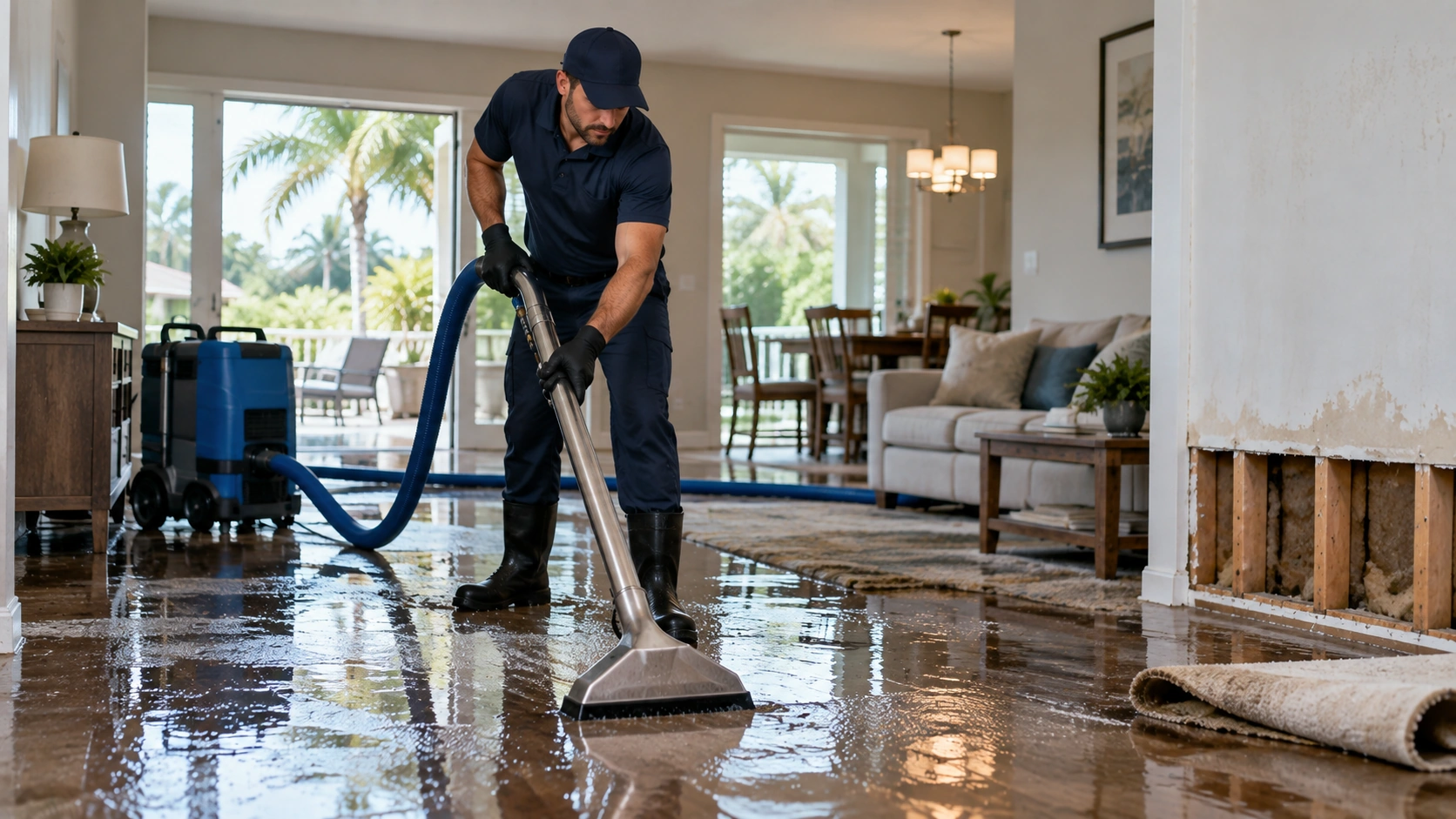
A restoration project in Immokalee usually follows a clear sequence. First the source is identified and stopped or isolated. Next comes an assessment, in which moisture meters and visual inspection are used to find where water has traveled. Standing water is then extracted, and structural drying begins with airflow and dehumidification. Moisture readings are taken repeatedly to monitor progress, and once materials return to normal levels the work moves on to cleaning, restoration and, where needed, repairs. The order matters, because skipping ahead to repairs before materials are dry can trap moisture behind new finishes.
In a rural building around Immokalee, older materials, crawlspaces or uninsulated cavities may hold water longer than expected, so moisture readings matter as much as visible dryness. It helps to separate extraction from drying. Extraction pulls out standing and pooled water; structural drying and dehumidification remove what is left inside walls, floors and other materials. Doing both, and measuring the results, is what keeps hidden moisture from becoming a secondary problem.
Not all water is the same. Clean water from a supply line is handled differently from rainwater that has crossed a roof and insulation, and both differ from sewage or flood water that has picked up contaminants. In Immokalee, flooding and storm water can be contaminated, and sewage backups require specialized cleanup. Contaminated water affects which materials can be cleaned and which should be removed, so identifying the category early shapes the whole scope.
Residential losses in Immokalee often center on bedrooms, kitchens, bathrooms and flooring, while commercial losses involve tenant spaces, inventory, equipment and keeping the business running. Because the property mix here includes single-family homes, manufactured homes and farm buildings, scope and coordination change from one project to the next.
The first hours matter after a water loss in Immokalee. Stop the source when it is safe, keep people away from hazards, take photos before anything is moved and request help with the assessment. The sooner wet materials are identified, the more likely it is that they can be dried rather than replaced.