Florida property damage restoration
2247 NW 3rd St, Miami, FL 33125

24/7 EMERGENCY WATER DAMAGE RESPONSE

Water Damage Restoration Orlando

Property owners in Orlando (Orange County) may be dealing with vacation rentals, hotels or condominiums, and each type of property shows water damage differently. A lake-country setting means saturated ground and lingering humidity after storms. Skyfold Restoration covers water, fire, mold and storm restoration for Orlando, from first assessment through drying and repairs, and lets you request help by phone or through the form on this page.

24/7 emergency water damage help is available for urgent water intrusion, flooding and storm-related property damage in Orlando. Availability should be confirmed for the specific property.

Orange CountyCounty
Central FloridaRegion
34 ZIP codesService-area directory
Residential + CommercialProperty pathways

24/7 Emergency Response

Public intake is available day and night.

Verified 15-Minute Dispatch Process

Coordination begins after intake; arrival is not guaranteed.

Licensed and Insured

Restoration work stays within authorized capabilities.

IICRC-Certified Technicians

Certification is described at technician level.

Moisture Documentation

Readings, observations, equipment, and progress records.

20 Years Experience

20 years of property restoration experience.

For Orlando, coordination begins after intake and review of the property details; any arrival timing depends on the loss, conditions and confirmed availability rather than a fixed promise.

Water Damage Restoration Orlando: Quick Answer

Water Damage Restoration Orlando starts with a property-specific assessment of the water source, affected materials and moisture conditions. For a property in Orlando, the useful starting point is a clear assessment of what happened, what materials were affected and whether moisture or contamination has moved beyond the visible area. In the current city-specific guidance, Lakes, ponds and retention areas are part of everyday life in Orlando. After heavy rain those water bodies rise, the ground stays saturated, and homes and businesses near them can see moisture problems that persist beyond the storm. In Central Florida the summer wet season brings near-daily afternoon thunderstorms, and heavy downpours can arrive with little warning. For Orlando, a useful assessment should distinguish source control, extraction or cleanup, structural drying, monitoring and any repair or reconstruction that follows.

  1. Problem
  2. Assessment
  3. Water Extraction
  4. Structural Drying
  5. Cleaning / Restoration

Request Water Damage Help →

Need Emergency Water Damage Help in Orlando?

Choose the situation closest to yours. If anyone is in danger, call 911 first.

For Orlando, urgent water-loss decisions depend on where the water entered, how far it has traveled and whether the affected property is Vacation rentals and second homes, Hotels and hospitality, Condominiums and high-rises. Use the emergency pathway when water is actively spreading, standing water is present, contamination is suspected or storm-related intrusion has affected occupied space. Lakes, ponds and retention areas are part of everyday life in Orlando. After heavy rain those water bodies rise, the ground stays saturated, and homes and businesses near them can see moisture problems that persist beyond the storm. In Central Florida the summer wet season brings near-daily afternoon thunderstorms, and heavy downpours can arrive with little

Active Water Intrusion

Use the emergency route for an active leak in Orlando when water is still moving. Tropical systems crossing the Florida peninsula can drop large amounts of rain on Orlando, raising lake levels and saturating the ground. Roof damage and lakefront flooding may occur together, and wet materials can remain damp long after the weather clears. Hurricane Charley in 2004 and Hurricane Irma in 2017 both brought damaging wind and rain across Central Florida. At single-family homes the first inspection should focus on the source, the path of travel and the materials that are already wet.

Call Now

Standing Water

In Orlando, standing water is not only a surface problem when the local setting includes orange county pairs the orlando urban core with fast suburban growth, older lakeside neighborhoods and one of the largest hospitality sectors in the country. afternoon thunderstorms and a landscape full of lakes shape local drainage. orlando combines a dense downtown, large tourism and hospitality corridors and residential neighborhoods scattered among small lakes, so a single storm can affect apartments, hotels and older homes in very different ways. The affected footprint should be documented before extraction, including single-family homes where applicable.

Call Now

Sewage Backup

Sewage backup in Orlando should be handled as a contamination event, not a routine water leak. Lakes, ponds and retention areas are part of everyday life in Orlando. After heavy rain those water bodies rise, the ground stays saturated, and homes and businesses near them can see moisture problems that persist beyond the storm. In Central Florida the summer wet season brings near-daily afternoon thunderstorms, and heavy downpours can arrive with little warning. In single-family homes, shared or occupied areas can make controlled access and source documentation particularly important.

Call Now

Flooding

In Orlando, the emergency flooding pathway starts with identifying where exterior water entered and what it touched. Tropical systems crossing the Florida peninsula can drop large amounts of rain on Orlando, raising lake levels and saturating the ground. Roof damage and lakefront flooding may occur together, and wet materials can remain damp long after the weather clears. Hurricane Charley in 2004 and Hurricane Irma in 2017 both brought damaging wind and rain across Central Florida. This matters for townhomes and hoa communities, where access and contents may change the mitigation sequence.

Call Now

Storm or Hurricane Damage

A tropical or severe-rain event in Orlando may continue to affect a property after the weather passes. Many properties here are vacation rentals, second homes or short-stay lodging, and a leak can run for days before anyone notices. A dense mix of multifamily, high-rise and commercial buildings means one failure can affect several occupants at once. For Orlando, this means measuring moisture beyond the obvious wet spots and remembering that lakefront lots and low areas may stay damp longer than higher ground. That makes moisture checks important around townhomes and hoa communities as well as the obvious point of intrusion.

Call Now

Burst Pipe or Plumbing Leak

In Orlando, a failed supply line, appliance connection or other plumbing source can move water into floors, wall bases and cabinet areas before the visible damage shows the full path. Safe source control and assessment come first.

Call Now

Local conditions

Why Orlando Requires Local Understanding

Orange County pairs the Orlando urban core with fast suburban growth, older lakeside neighborhoods and one of the largest hospitality sectors in the country. Afternoon thunderstorms and a landscape full of lakes shape local drainage. Orlando combines a dense downtown, large tourism and hospitality corridors and residential neighborhoods scattered among small lakes, so a single storm can affect apartments, hotels and older homes in very different ways.

Lakes, ponds and retention areas are part of everyday life in Orlando. After heavy rain those water bodies rise, the ground stays saturated, and homes and businesses near them can see moisture problems that persist beyond the storm. In Central Florida the summer wet season brings near-daily afternoon thunderstorms, and heavy downpours can arrive with little warning.

Tropical systems crossing the Florida peninsula can drop large amounts of rain on Orlando, raising lake levels and saturating the ground. Roof damage and lakefront flooding may occur together, and wet materials can remain damp long after the weather clears. Hurricane Charley in 2004 and Hurricane Irma in 2017 both brought damaging wind and rain across Central Florida.

Many properties here are vacation rentals, second homes or short-stay lodging, and a leak can run for days before anyone notices. A dense mix of multifamily, high-rise and commercial buildings means one failure can affect several occupants at once. For Orlando, this means measuring moisture beyond the obvious wet spots and remembering that lakefront lots and low areas may stay damp longer than higher ground.

General references for this section include the National Hurricane Center, the National Weather Service, the FEMA Flood Map Service Center, Orange County emergency management, and the Florida Department of Business and Professional Regulation for mold-related licensing. Property-specific flood risk should be confirmed with official maps and your insurer.

City-specific restoration context

What Makes Restoration Different in Orlando

Orange County pairs the Orlando urban core with fast suburban growth, older lakeside neighborhoods and one of the largest hospitality sectors in the country. Afternoon thunderstorms and a landscape full of lakes shape local drainage. Orlando combines a dense downtown, large tourism and hospitality corridors and residential neighborhoods scattered among small lakes, so a single storm can affect apartments, hotels and older homes in very different ways. For a restoration assessment in Orlando, that local context should be considered alongside the immediate source of damage, the building type and the materials that have been affected.

Properties such as Vacation rentals and second homes, Hotels and hospitality, Condominiums and high-rises can have different access points, occupancy patterns and moisture pathways. A practical response in Orlando should therefore connect the visible damage to the areas most likely to have been affected behind finishes, below flooring, above ceilings or within shared assemblies.

The existing local guidance for Orlando also notes: Lakes, ponds and retention areas are part of everyday life in Orlando. After heavy rain those water bodies rise, the ground stays saturated, and homes and businesses near them can see moisture problems that persist beyond the storm. In Central Florida the summer wet season brings near-daily afternoon thunderstorms, and heavy downpours can arrive with little warning. The practical effect is that restoration should account for both the immediate damage and the conditions that can keep materials damp afterward.

For owners comparing service areas around Orlando, the page also connects the location to Winter Park, Maitland, Gotha. ZIP coverage shown for this location includes 33125, 32801, 32803, 32804; exact service availability should be confirmed for the property.

Water Damage Restoration for Orlando Properties

Properties in Orlando and Orange County can include Vacation rentals and second homes, Hotels and hospitality, Condominiums and high-rises. These buildings do not all dry or contain water the same way, so the restoration plan should follow construction, occupancy and access conditions rather than applying one generic sequence.

Vacation rentals and second homes

Homes that sit unoccupied for days or weeks can leak unnoticed.

Restoration concern: Long-standing moisture and hidden secondary damage.

Hotels and hospitality

In Orlando hospitality properties, guest rooms, kitchens, mechanical areas and common spaces often share building systems, so one water event can affect both the operating area and the spaces that need to remain usable.

Restoration concern: Room-by-room drying and keeping unaffected areas open.

Condominiums and high-rises

In Orlando multifamily properties, water can travel through floors, risers and shared ceilings, turning a unit-level loss into a multi-space issue that requires careful documentation and access coordination.

Restoration concern: Access, unit-by-unit moisture mapping and association coordination.

Offices and professional buildings

Ceiling leaks and HVAC condensation reach carpet, furniture, records and equipment.

Restoration concern: Business interruption and protecting records and equipment.

Lakefront and waterfront homes

Low ground close to water means rain and rising water can reach living areas.

Restoration concern: Flood-related moisture, contamination and lower-level materials.

Single-family homes

Many homes in Orlando use slab or concealed plumbing layouts, so a leak can move behind walls, beneath flooring or around cabinets before the surface stain shows the full extent of the loss.

Restoration concern: Moisture in drywall, baseboards, flooring and cabinet bases.

Townhomes and HOA communities

Shared walls and roof lines mean a leak in one unit can reach a neighbor.

Restoration concern: Coordination across units and documentation for association and insurer.

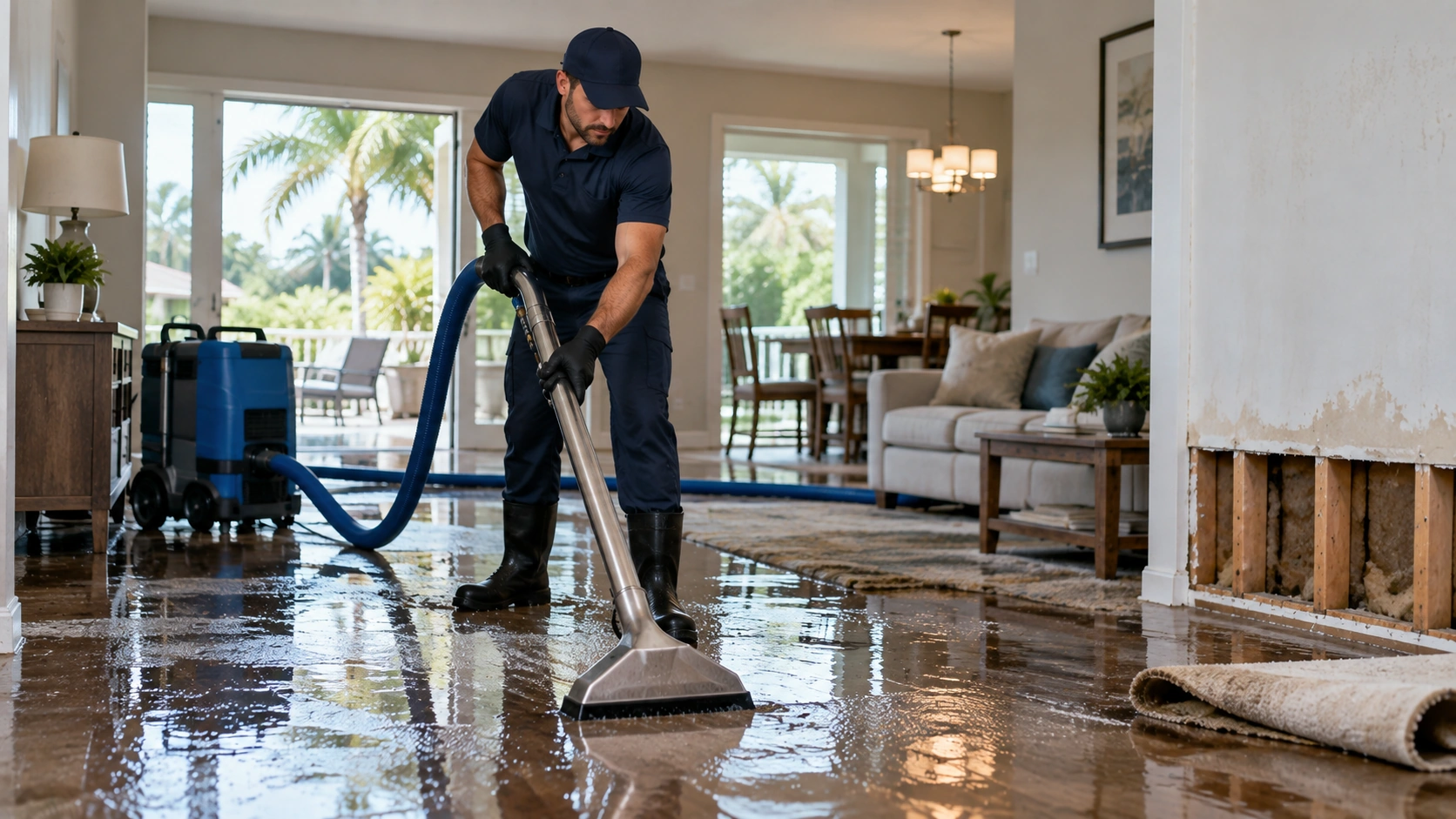
Water damage restoration and extraction service in Orlando, FL
Water damage restoration and extraction; representative Skyfold service image.

Core service 1

Water Damage Restoration in Orlando

  1. Source
  2. Assessment
  3. Extraction
  4. Drying
  5. Monitoring
  6. Cleaning / Restoration

In Orlando, water damage often shows up where lakes, rain and building age meet. Roofs and windows leak during heavy summer storms, plumbing and air-conditioning lines fail, and lakefront lots can take on water when lake levels and the water table are high. Owners in Winter Park, Maitland and Gotha face a similar mix of causes, but details such as ground elevation, drainage and construction age can change the outcome from one Orlando address to another.

Central Florida's summer storms are frequent and often intense, and the lakes and low spots across the region take time to drain.

Because the local property mix includes vacation rentals, hotels and condominiums, no two water losses in Orlando look exactly alike. A leak in one type of building may stay within a single room, while the same failure in another can reach neighboring spaces. Restoration planning starts with understanding the building, not with a one-size-fits-all plan.

Whether the loss is small or large, the logic is the same in Orlando: source, assessment, extraction, drying, monitoring, then cleaning and restoration. Each step depends on the one before it. Extraction without assessment can miss wet materials, and repairs without verified drying can hide damp framing behind fresh paint. Documenting readings along the way also gives the property owner and insurer a record of how the structure responded.

In a lake-country setting like Orlando, humidity and a high water table slow drying. Measuring moisture, not guessing, is what tells you whether a wall or floor is finished drying. It helps to separate extraction from drying. Extraction pulls out standing and pooled water; structural drying and dehumidification remove what is left inside walls, floors and other materials. Doing both, and measuring the results, is what keeps hidden moisture from becoming a secondary problem.

Restoration teams generally sort water into clean, gray and black categories, and the category can worsen with time. In Orlando, that means a supply-line leak, a rain-driven roof leak, a backed-up drain and a flooded street each lead to a different plan. Sewage cleanup and flood restoration are separate service pathways because contamination changes safety, cleaning and disposal decisions.

Residential losses in Orlando often center on bedrooms, kitchens, bathrooms and flooring, while commercial losses involve tenant spaces, inventory, equipment and keeping the business running. Because the property mix here includes vacation rentals, hotels and condominiums, scope and coordination change from one project to the next.

If you are dealing with water in Orlando, call as soon as you can safely do so. Shut off the water source if it is safe, avoid electrical hazards, photograph the damage and move valuables out of the wet area. Do not wait for surfaces to look dry, because moisture in walls and floors often remains long after the visible signs fade.
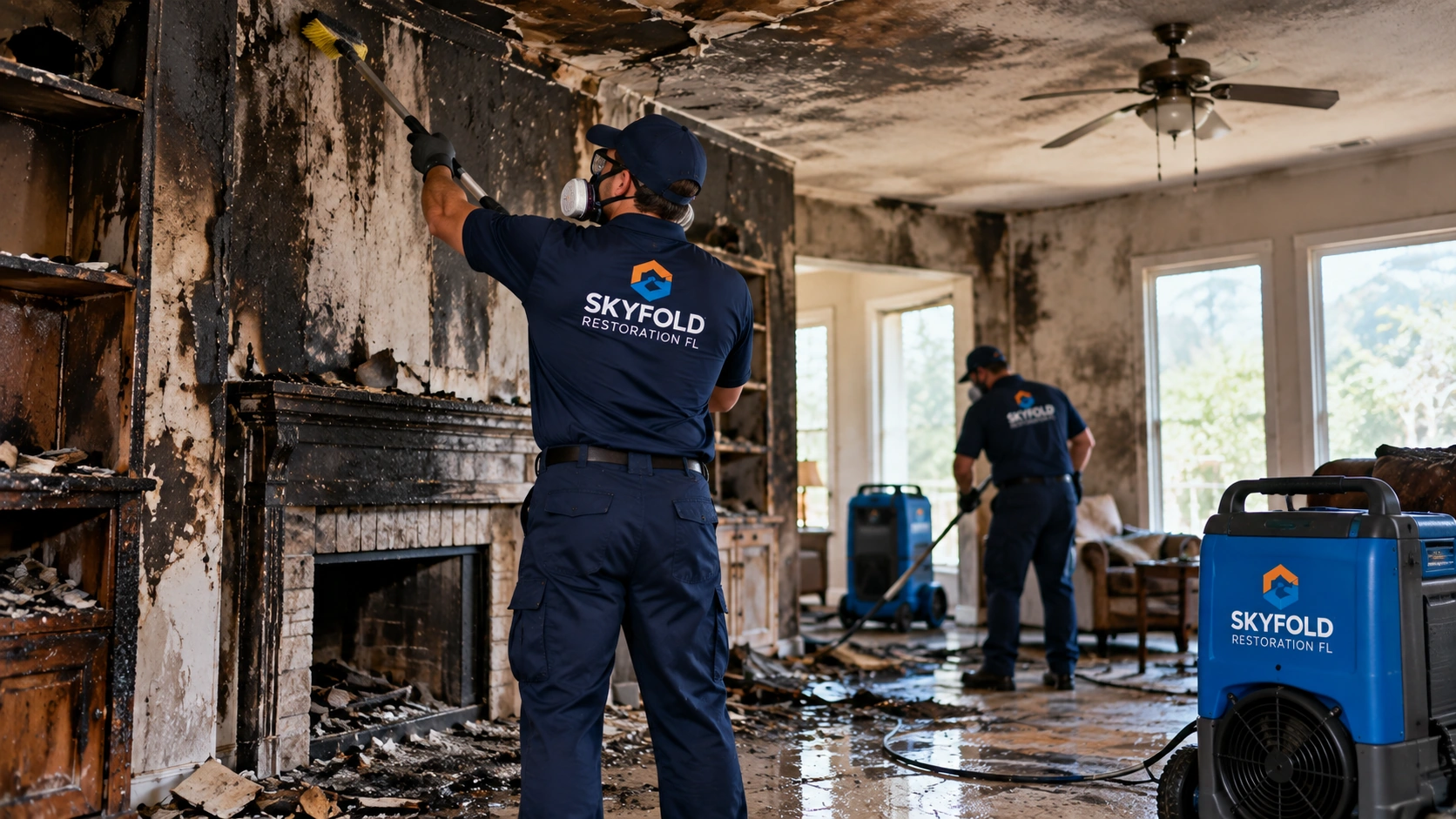
Fire and smoke damage restoration service in Orlando, FL
Fire and smoke restoration; representative Skyfold service image.

Core service 2

Fire & Smoke Damage Restoration in Orlando

A fire changes a property in ways that reach well beyond the burned area. Heat and flames cause structural damage, smoke travels through rooms and HVAC systems, soot settles on surfaces, and the water used to put the fire out soaks floors, walls and contents. In Orlando, fire restoration usually means dealing with all of these at once, in a sensible order.

In Orlando, fires in homes and vacation rentals can leave smoke throughout a property, and lakefront humidity slows drying after firefighting water soaks into floors and walls.

Smoke damage can be invisible. Odor may linger in fabrics, insulation and air ducts long after visible soot is cleaned, and different kinds of smoke leave different residues. Cleaning methods are chosen to match the material, since aggressive cleaning can spread soot or damage finishes. Contents are sorted into what can be cleaned, what can be restored offsite and what cannot be saved.

Safety comes first when a fire has affected a property in Orlando. Stay out until authorities allow entry, keep children and pets away from soot and debris, and take photographs before cleaning starts. Save receipts for temporary expenses and keep a list of damaged items for your insurer.

For Orlando property losses, belongings can be sorted into items that can be cleaned in place, items that may need off-site restoration, and items that cannot be recovered. Photos and inventories help document those decisions.

The water used to fight a fire needs the same attention as any other water loss: extraction, structural drying and moisture checks. Where damage is extensive, contents restoration, pack-out and storage, and repairs or reconstruction may follow. Which of those services are needed depends on the loss, and scope and availability should be confirmed for your property.

Biohazard cleanup technicians in protective gear serving Orlando, FL
Biohazard cleanup; representative Skyfold service image.

Core service 3

Biohazard Cleanup in Orlando

Biohazard and contaminated-property losses in Orlando can require controlled access, appropriate protective measures, affected-material assessment, cleaning and documentation. Sewage backups, contaminated water and other biological hazards are handled differently from ordinary clean-water leaks.

For a contaminated loss in Orlando, keep people and pets away from the affected area and avoid direct contact. The response should account for the source, affected materials and electrical or structural hazards before cleanup begins.

In Orlando, contaminated-property planning can involve controlled access, appropriate containment, removal of unsalvageable materials, cleaning and disinfection, odor management and coordination with drying work. The actual scope depends on the source and materials involved.

Mold remediation technician service in Orlando, FL
Mold remediation; representative Skyfold service image.

Core service 4

Mold Remediation & Moisture Management in Orlando

Mold is a moisture problem first. Before deciding how to handle visible or suspected growth in Orlando, the priority is to find and correct the moisture source, since cleaning or removing material without fixing the source only invites the problem to return.

A high water table and lake-area humidity keep moisture close to many buildings in Orlando, and lower-level rooms, garages and spaces around plumbing are areas to watch after wet weather.

Places to check in Orlando properties include closets, bathrooms and bedrooms that stay closed while a unit is empty, and in hotels, guest-room bathrooms, ceilings below plumbing chases and rarely used rooms.

Moisture often hides in places that are not visible from the room: the back of a wall, the underside of flooring, insulation above a ceiling or the area around an air handler. Detecting it takes tools as well as a careful eye, which is why moisture assessments are part of both water and mold work.

Public guidance from the U.S. EPA notes that drying wet materials within 24 to 48 hours usually keeps mold from growing, which is why fast extraction and measured drying matter in Orlando. Fixing leaks promptly, keeping indoor humidity under control and giving wet materials time to dry completely are the most practical steps property owners can take.

Skyfold Restoration lists mold inspection and mold remediation among its services. Florida licenses mold assessors and mold remediators, and the two roles are separate, so ask who will be doing what and confirm the requirements that apply to your property. Not every water loss leads to mold, and prompt drying is the best way to lower the chance of it.

This Orlando page provides general property-restoration information, not medical advice. Health concerns about mold or indoor air should be discussed with an appropriate health professional.

Storm and hurricane restoration service in Orlando, FL
Storm and hurricane restoration; representative Skyfold service image.

Core service 5

Storm & Hurricane Damage Restoration in Orlando

Tropical systems crossing the Florida peninsula can drop large amounts of rain on Orlando, raising lake levels and saturating the ground. Roof damage and lakefront flooding may occur together, and wet materials can remain damp long after the weather clears.

Hurricane season runs from June 1 to November 30, but water damage from storms can happen well outside those dates. Hurricane Charley in 2004 and Hurricane Irma in 2017 both brought damaging wind and rain across Central Florida. In Orlando, the practical concern is the sequence of events after a storm: roof and window openings, interior water, then possibly flooding, each of which needs its own response.

For Orlando, storm water can enter through roof systems, windows, doors or exterior walls and then move into ceilings and floors. If outside flooding is also present, the source and contamination level need to be identified before drying and material-removal decisions are made.

Emergency roof protection, such as tarping, is one of the ways to stop additional water from entering after a storm. Skyfold Restoration lists emergency roof tarping among its services, and availability and scope should be confirmed for your property. Protecting the opening first keeps interior drying from being undone by the next rain.

For a Orlando storm loss, the sequence generally moves from making the property safe to protecting the building, then extraction or cleanup, drying, monitoring and repair. Photos, receipts and dated notes help keep the restoration record organized as the work progresses.

In Orlando, storm-related moisture can reveal itself after the weather has cleared. Ceilings, insulation, wall cavities, attics and flooring may remain wet even when the roof or opening has been temporarily protected.

Because storms affect whole areas at once, Orlando and nearby communities such as Winter Park and Maitland can all need help at the same time. Reaching out early and documenting damage promptly helps keep the process organized.

Safety comes first in Orlando: stay away from downed lines, avoid standing or contaminated water where electrical hazards may exist, and do not enter buildings with visible structural damage. Generators must never be operated indoors.

Additional Restoration Services for Orlando

Supporting services on the Orlando page connect the main restoration pathways with the additional work a property may need. Confirm the specific service and availability for the property before scheduling.

Smoke & Soot Cleanup

Cleaning residue from surfaces and contents after a fire.

Learn more
Contents Restoration

Cleaning and restoring belongings that can be saved.

Learn more
Pack-Out & Storage

Moving contents out of the work area so restoration can proceed.

Learn more
Sewage Cleanup

Specialized cleanup when water is contaminated.

Learn more
Biohazard Cleanup

Cleanup of biological hazards where appropriate.

Learn more
Emergency Roof Tarping

Temporary roof protection after storm damage.

Learn more
Repairs & Reconstruction

Rebuilding materials that could not be saved.

Learn more
Commercial & Multifamily Restoration

Restoration planned around businesses and multi-unit buildings.

Learn more

Common Water Damage Problems in Orlando

Where a page exists for a problem, the name links to it.

HVAC

HVAC problems

  • AC Leak
  • Condensate Drain
  • Drain Pan Overflow

Air conditioning runs almost year-round in Orlando, so clogged condensate lines and overflowing drain pans are frequent, and often overlooked, water sources.

Building

Building problems

  • Roof Leak
  • Ceiling Water Damage
  • Wall Moisture
  • Attic Moisture

Roofs and flashing take the brunt of Orlando's summer storms, and ceilings and attics are where the water often shows first.

Appliances

Appliances problems

Appliance hoses and supply lines fail at the connection, often inside a closet or behind a cabinet in Orlando homes and rentals.

Sewer

Sewer problems

Backups and contaminated water need a different response than clean leaks, and Orlando properties can see them after heavy rain or drain failures.

Which Restoration Service May Address Your Orlando Water Damage Problem?

Problem, damage and restoration path for Orlando
Local ProblemPotential DamagePossible Restoration Path
Burst pipe or supply-line failureDrywall, baseboards and flooringWater extraction and structural drying
Roof leakCeilings, attic insulation and wallsMitigation, drying and moisture monitoring
AC leak or clogged condensate lineCeilings, walls and air-handler areasMoisture assessment and drying
Water heater leakUtility area and flooringExtraction and drying
Slab leakFlooring, subfloor and baseboardsMoisture assessment and drying, with leak repair by the appropriate trade
Sewage backupPorous materials and contentsSpecialized sewage cleanup
FloodingLower levels and contentsFlood restoration, extraction and drying
Persistent dampness or musty odorWalls, ceilings and hidden cavitiesMoisture assessment, with mold inspection or remediation where indicated

For an Orlando property, the restoration pathway depends on the source, the condition of the water or damage, the materials involved and how far the loss has traveled.

Residential Water Damage Restoration in Orlando

For homeowners in Orlando, the priority is to identify the source, map the affected areas and separate recoverable materials from finishes that cannot be dried or cleaned in place. Lakes, ponds and retention areas are part of everyday life in Orlando. After heavy rain those water bodies rise, the ground stays saturated, and homes and businesses near them can see moisture problems that persist beyond the storm. In Central Florida the summer wet season brings near-daily afternoon thunderstorms, and heavy downpours can arrive with little warning.

Water damage restoration for homes

Water Damage Restoration for Multifamily Properties in Orlando

In Orlando multifamily properties, a single loss can affect more than one unit, shared assemblies or common areas. The response should document the origin, affected spaces and access needs while coordinating drying and follow-up work. Lakes, ponds and retention areas are part of everyday life in Orlando. After heavy rain those water bodies rise, the ground stays saturated, and homes and businesses near them can see moisture problems that persist beyond the storm. In Central Florida the summer wet season brings near-daily afternoon thunderstorms, and heavy downpours can arrive with little

Commercial and multifamily restoration

Commercial Water Damage Restoration in Orlando

For commercial in Orlando, restoration planning also has to account for inventory, occupants, operating areas and the path water or smoke can travel through a larger building. Lakes, ponds and retention areas are part of everyday life in Orlando. After heavy rain those water bodies rise, the ground stays saturated, and homes and businesses near them can see moisture problems that persist beyond the storm. In Central Florida the summer wet season brings near-daily afternoon thunderstorms, and heavy downpours can arrive with little warning.

Commercial restoration

What Happens After You Request Water Damage Help in Orlando?

If a property in Orlando has water intrusion, storm-related water entry or another restoration need, use the request options on this page to describe the source, affected area and any immediate safety concern. Include the property location so the applicable service area can be confirmed.

  1. 01

    Contact

    For Orlando, describe the location of the loss, where water or smoke is visible, the suspected source and any safety concerns so the right assessment pathway can be selected.

  2. 02

    Assessment

    The affected areas in Orlando are evaluated for visible and concealed damage, including materials or spaces connected to the initial loss.

  3. 03

    Source Control

    The cause affecting the Orlando property is identified and stopped or isolated where that can be done safely, while electrical, structural and contamination hazards are noted.

  4. 04

    Extraction / Mitigation

    Standing water and other immediate hazards in the Orlando property are addressed first so additional materials and contents are not exposed longer than necessary.

  5. 05

    Structural Drying

    Where drying is appropriate, air movement and dehumidification are adjusted around the materials and conditions found in the Orlando property.

  6. 06

    Moisture Monitoring

    Readings are compared over time in the Orlando property to confirm that affected materials are moving toward appropriate moisture conditions before close-out or repair.

  7. 07

    Cleaning / Restoration

    Surfaces and contents are cleaned, and salvageable materials are restored.

  8. 08

    Repairs / Reconstruction

    Once the Orlando property is stabilized and documented, repair or reconstruction can address finishes or assemblies that cannot be recovered in place.

See the full restoration process

Water Extraction & Moisture Detection in Orlando

Moisture detection is what separates finished drying from guesswork. This overview lists the equipment commonly involved in extraction and moisture detection and why each item matters for Orlando properties.

ToolPurposeWhy it matters
Water extraction equipmentRemoves bulk water from floors and carpetingTakes out standing water quickly so less soaks into materials
Air moversMove air across wet surfacesSpeeds evaporation from floors, walls and cavities
DehumidifiersRemove moisture from the airKeep humidity low so materials can release moisture
Moisture metersMeasure moisture in building materialsShow what is wet and confirm when it is dry
HygrometersMeasure temperature and humidityTrack the drying environment and guide equipment settings
Thermal imagingShows temperature differences on surfacesHelps locate hidden moisture before opening walls, where relevant

Equipment used in Orlando depends on the size of the loss, the building materials, access and measured conditions; the examples below are educational rather than a guarantee of a particular equipment setup.

Water Damage Insurance & Documentation in Orlando

For a Orlando property loss, a clear record of the source, visible damage, affected materials, mitigation steps and follow-up work can make the restoration file easier to review. This page lists the local ZIP coverage, and records should match the actual property location (33125, 32801, 32803, 32804). Coverage decisions remain with the policy and insurer.

  • Photographs and video. Capture the damage before anything is moved, including wide shots and close-ups.
  • Dates and timeline. Note when the loss was discovered and when steps were taken.
  • Cause or source. Record what failed or how the water entered, if known.
  • Affected materials. List flooring, walls, ceilings, cabinets and contents that were wet.
  • Mitigation records. Keep notes on extraction, protective steps and equipment used.
  • Moisture and drying records. Retain readings and drying logs where provided.
  • Invoices and estimates. Save every invoice, estimate and receipt related to the loss.
  • Communication. Keep a log of calls and emails with your insurer or adjuster.

Water damage insurance guide  |  Insurance claim guidance

Emergency or Follow-Up Restoration?

Emergency

  • Active water or a leak you cannot stop
  • Standing water on floors
  • Sewage backup or contaminated water
  • Flooding from rain or storm surge
  • Storm or roof intrusion
  • Significant ceiling or wall damage

Call Now

Follow-Up

  • A previous loss that was never fully dried
  • Musty odor or moisture concerns
  • Documentation for an insurance claim
  • Repairs and reconstruction after mitigation
  • Restoration planning for a vacant or seasonal property
  • A stain that keeps returning

Request Follow-Up Help

Why Property Owners Choose Skyfold Restoration in Orlando

Documented restoration process

The Orlando page uses a structured assessment, mitigation, drying or cleanup, monitoring and restoration workflow so property owners can see how the loss moves from initial evaluation toward repair.

Florida service-area structure

Coverage is organized by region, city and ZIP code so you can see where help is requested from.

Residential and commercial pathways

Homes, condominiums, apartments and businesses each have a defined route to request help.

Problem-based guidance

The problem guides linked from the Orlando page explain common loss scenarios such as plumbing failures, roof intrusion, HVAC leaks and sewage backups and show what questions to ask next.

Four core restoration disciplines

For Orlando, the service structure separates water, fire and smoke, mold and moisture, and storm-related restoration so a property owner can start with the type of loss involved.

A structured restoration process

From assessment to drying, monitoring and repairs, the process is described step by step.

Request Water Damage Help in Orlando

Tell us what happened and where. You can also call +1-833-606-6010.

For emergencies, call instead of waiting for a form reply.

Water Damage Restoration Service Area in Orlando

Skyfold Restoration organizes the Orlando service area by city, ZIP code and nearby communities rather than treating every Florida property as the same location. This page connects Orlando with Winter Park, Maitland, Gotha and the ZIP coverage shown below.

  • 32801
  • 32803
  • 32804
  • 32805
  • 32806
  • 32807
  • 32808
  • 32809
  • 32810
  • 32811
  • 32812
  • 32814
  • 32816
  • 32817
  • 32818
  • 32819
  • 32820
  • 32821
  • 32822
  • 32824
  • 32825
  • 32826
  • 32827
  • 32828
  • 32829
  • 32830
  • 32831
  • 32832
  • 32833
  • 32835
  • 32836
  • 32837
  • 32839
  • 32899

ZIP coverage on the Orlando page is a service-area directory, not a claim that Skyfold Restoration maintains a physical office in every ZIP code listed.

Nearby Florida Service Areas

Communities close to Orlando in Central Florida. These are navigation links, not separate offices.

Orlando, Florida Service Area

Orlando, Florida

Service area: Orlando, Orange County, Central Florida.

Business address: 2247 NW 3rd St, Miami, FL 33125. This page describes a service area and does not represent a local office.

Local FAQs: Water Damage in Orlando

Does Skyfold Restoration serve homes in Orlando?

Yes, residential properties in Orlando are part of our service area in Orange County. Call or use the request form and we will confirm what is available for your home.

Can I request help by ZIP code in Orlando?

Yes. Our directory lists 34 ZIP codes for Orlando, and the form has a ZIP field so your request can be matched to the right area. The list on this page is a service-area directory, not a list of offices.

Do you handle storm-related water intrusion in Orlando?

Storm water intrusion is one of the main reasons people in Orlando request help. The work usually starts with protecting the opening, then extraction and drying. Availability and scope should be confirmed for your property.

Does Skyfold have an office in Orlando?

This page describes a service area, not a local office. Our business address is 2247 NW 3rd St, Miami, FL 33125, and Orlando is covered as part of our Florida service structure. Availability should be confirmed for your specific address.

What should I do if water is still entering my property?

If it is safe, shut off the water source and stay away from electrical hazards. Take photos, move valuables out of the wet area and call for help. Do not wait for surfaces to dry on their own.

What happens after water extraction in Orlando?

After extraction, the remaining moisture in walls, floors and other materials is measured and structural drying begins with airflow and dehumidification. Readings are repeated until materials are dry, and then cleaning and repairs follow if needed. In Orlando, humidity can slow drying, so monitoring matters.

Do you handle sewage-related water loss in Orlando?

Yes. In Orlando, sewage and other contaminated water are handled differently from clean leaks because the cleanup, containment and material-disposal requirements can change with the source and condition of the water.

Can hidden moisture remain after a leak in Orlando?

It can. Moisture often stays in framing, insulation and subfloors after the surface looks dry, especially in humid conditions like those in Orlando. A moisture assessment can show what is still wet.

Do you serve vacation rentals and second homes in Orlando?

Yes. Multi-unit and shared-wall properties in Orlando are part of our residential and multifamily pathways. Water can travel between units, so restoration typically includes coordination with managers, associations and neighbors, plus careful documentation.

Do you work with commercial properties in Orlando?

Yes. Commercial and multifamily restoration is a listed service. In Orlando, businesses such as hotels and lodging and offices face downtime, inventory and documentation concerns, and work is planned to limit disruption. Confirm scope and availability for your property.

What happens after I request service?

For Orlando, the request starts with the property location, source of damage and any safety concern. The general sequence can then move through assessment, source control, extraction or cleanup, drying or monitoring, and repairs as needed; no fixed arrival time is promised on this page.

Emergency help

Need Water Damage Restoration in Orlando?

When requesting help for an Orlando property, describe what happened, whether water or another hazard is still active and which rooms or building areas are affected. Availability and next steps depend on the property and loss conditions.

Call NowRequest Service